Session 1 · Kickoff — Design Thinking & Innovation
By the end of Session 1 — you'll walk out with…
Meet Your Facilitator - Bala Ramadurai
Entrepreneur, Professor, Author and Innovation Coach

- Marie Curie Research Fellow at Politecnico di Milano, Milan, Italy
- PhD from Arizona State University, USA (Materials)
- BTech from IIT Madras, India (Metallurgy)
Prof. Bala Ramadurai - Professor
- IIT Madras, Chennai, India
- Universidad Panamericana, Mexico City, Mexico
- Symbiosis Institute of Business Management, Pune, India
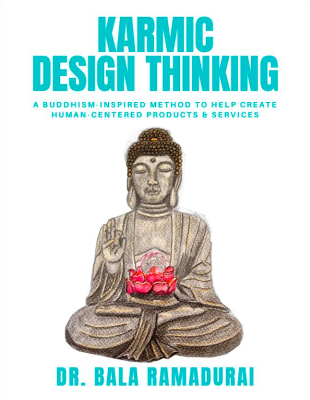
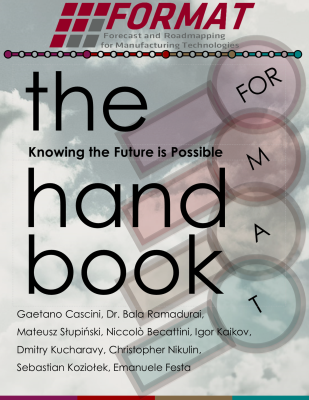
Bala Ramadurai - Author
 |
 |
 |
 |
Bala Ramadurai - Innovation Coach

Bala Ramadurai - Entrepreneur

Spirelia
Innovate with Confidence
- Srishti OS — The AI-Native Innovation Platform
Spirelia Innovation Pvt. Ltd.
"Innovate with Confidence, Powered by Insight"
S R I S H T I — The AI-Native Innovation Platform🔭UtkarshaTechnology Forecasting
& RoadmappingMVP LIVE🔬UttishtaAI Inventor's
AssistantIN PIPELINE💡KarmajaStructured Innovation
& Idea GenerationVISION🛡️NarasimhaIP Capture &
ProtectionVISION⚙️AnantaRapid
PrototypingVISION
Courses Taught
Design Thinking
Human Centred Design of products and services
Innovate Like a Boss
Systematic Innovation using methodologies like TRIZ, Brainstorming
Technology Forecasting

Love to keep in touch
https://balaramadurai.net/about/
bala@balaramadurai.net
My LinkedIn

Your Intros
Short Intro of Yourself
- What is your specialization or subject of your studies?
- What do you aspire to do in life?
- What is your superpower?
Plan (1/5) — Week 1: Empathize begins
| # | Date | Session | Pts |
|---|---|---|---|
| 1 | Mon Jun 15 | Design Thinking & Innovation | |
| 2 | Tue Jun 16 | Empathize — method (CJM, personas) | |
| 3 | Wed Jun 17 | Empathize — interview craft + rehearse + launch | |
| Thu Jun 18 | ✦ No class — FIFA World Cup MX match | ||
| Jun 19–21 | ✦ Field work — meet ≥3 customers |
Plan (2/5) — Week 2: Empathize showcase → Analyze
| # | Date | Session | Pts |
|---|---|---|---|
| 4 | Mon Jun 22 | Empathize — showcase | 5 + 5 |
| 5 | Tue Jun 23 | Analyze — Multi-Why | |
| Wed Jun 24 | ✦ No class — FIFA World Cup match | ||
| 6 | Thu Jun 25 | Analyze — Conflict of Interest |
Plan (3/5) — Week 3: Analyze showcase → Presentation → Solve
| # | Date | Session | Pts |
|---|---|---|---|
| 7 | Mon Jun 29 | Analyze — showcase | 5 + 5 |
| Tue Jun 30 | ✦ No class — FIFA World Cup match | ||
| 8 | Wed Jul 1 | Presentation Skills — deep dive | |
| 9 | Thu Jul 2 | Solve — Brainstorming + TRIZ |
Plan (4/5) — Week 4: Solve wrap → Test
| # | Date | Session | Pts |
|---|---|---|---|
| 10 | Mon Jul 6 | Solve — concept + tests & pitch prep | |
| 11 | Tue Jul 7 | Solve — investor pitch | 5 + 5 |
| 12 | Wed Jul 8 | Bullet-Proofing — full session (2 rounds) | |
| 13 | Thu Jul 9 | Test — intro + prototype & video tasks | |
| Fri Jul 10 | Whole-day workshop — build your app | ||
| Jul 11–13 | ✦ Finish v1 + test on a real customer |
Plan (5/5) — Week 5: Test Wrap → Iterate → Finale
| # | Date | Session | Pts |
|---|---|---|---|
| 14 | Tue Jul 14 | Test showcase v1 — demos + top 5 live | 5 + 5 |
| 15 | Wed Jul 15 | v2 results → ad-video workshop + prep | |
| 16 | Thu Jul 16 | Finale — all 20 pitch live, awards | 5 + 5 |
How this course works
- Live, Mon–Thu — most work happens in the room, with your studio buddy
- Almost no homework — you run your own project on something you care about
You're great with your hands — same build → test → improve, now applied to thinking.
Your buddy = company, not co-owner
- Paired (1–2) for field-work company · idea-bouncing · rehearsal · peer review
- Your project, your portfolio, your grade — yours alone. You present your work.
- Swap buddies anytime — just email me
The Scoreboard — 100 · absolute · no curve
| Bucket | Marks | In one line |
|---|---|---|
| Project Portfolio (5 phases) | 50 | One upload/phase · AI-graded |
| Presentation & Communication | 25 | Present your work every showcase · graded for growth |
| Live Engagement | 15 | What you produce in the room, from your login |
| Peer-review | 10 | Honest checklist reviews of 2–3 classmates |
AI is your partner, not your author
Rides through every phase — a fast, tireless junior colleague: great drafts, terrible judgement.
The 3 things AI cannot do for you:
- Feel — it never met your customer (empathy is yours)
- Be trusted — it hallucinates (every claim = a hypothesis to verify)
- Be specific — it averages (you bring the real human)
Your AI toolkit — two paths, both full marks
- Thinking partner (everyone): any chat assistant
- Build partner (optional)
Default build tool Google Antigravity (free) · or Claude Code · Cursor · Lovable · Bolt · Replit
Physical/service projects stay low-fi (Figma, cardboard, roleplay) — 100% fine
Build path = Ship It
What the heck is Innovation?
Innovation
10s → 100 hours


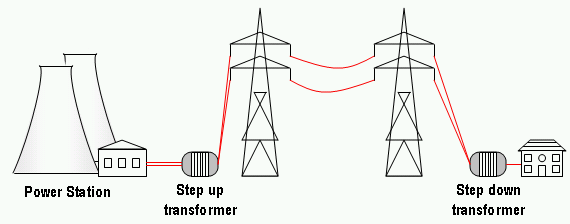
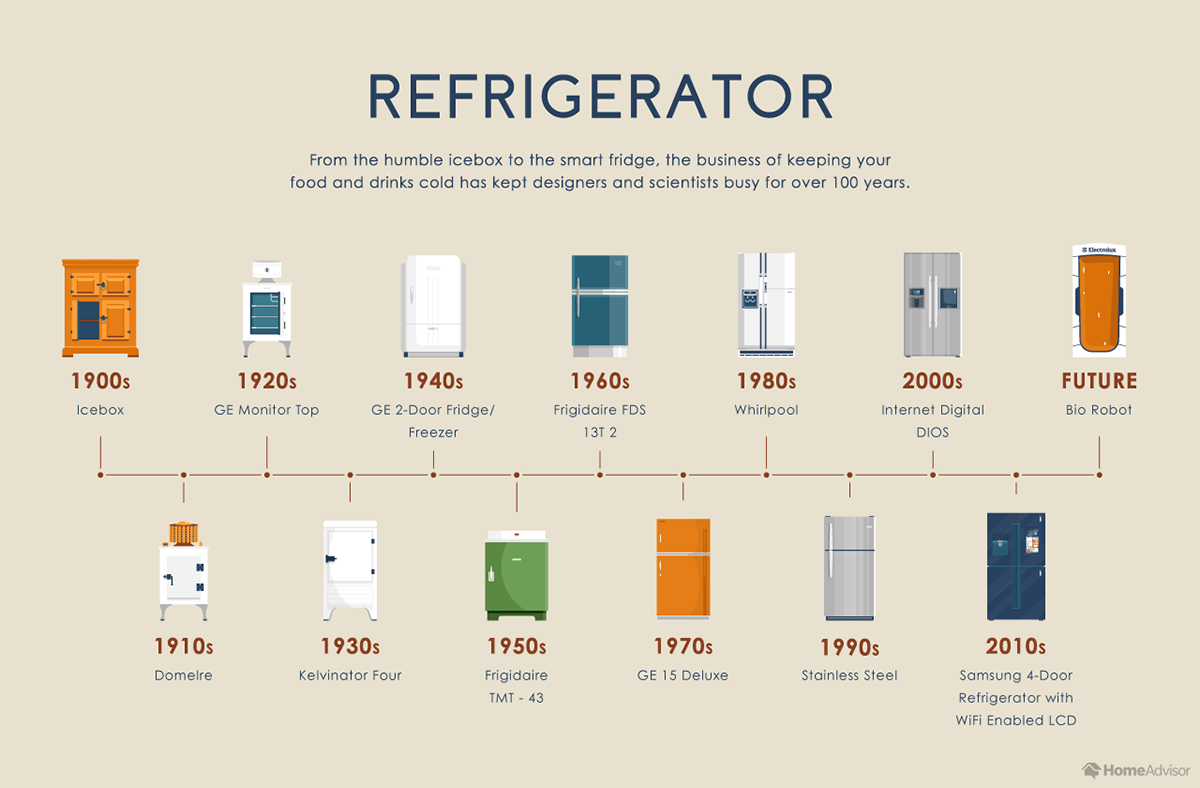
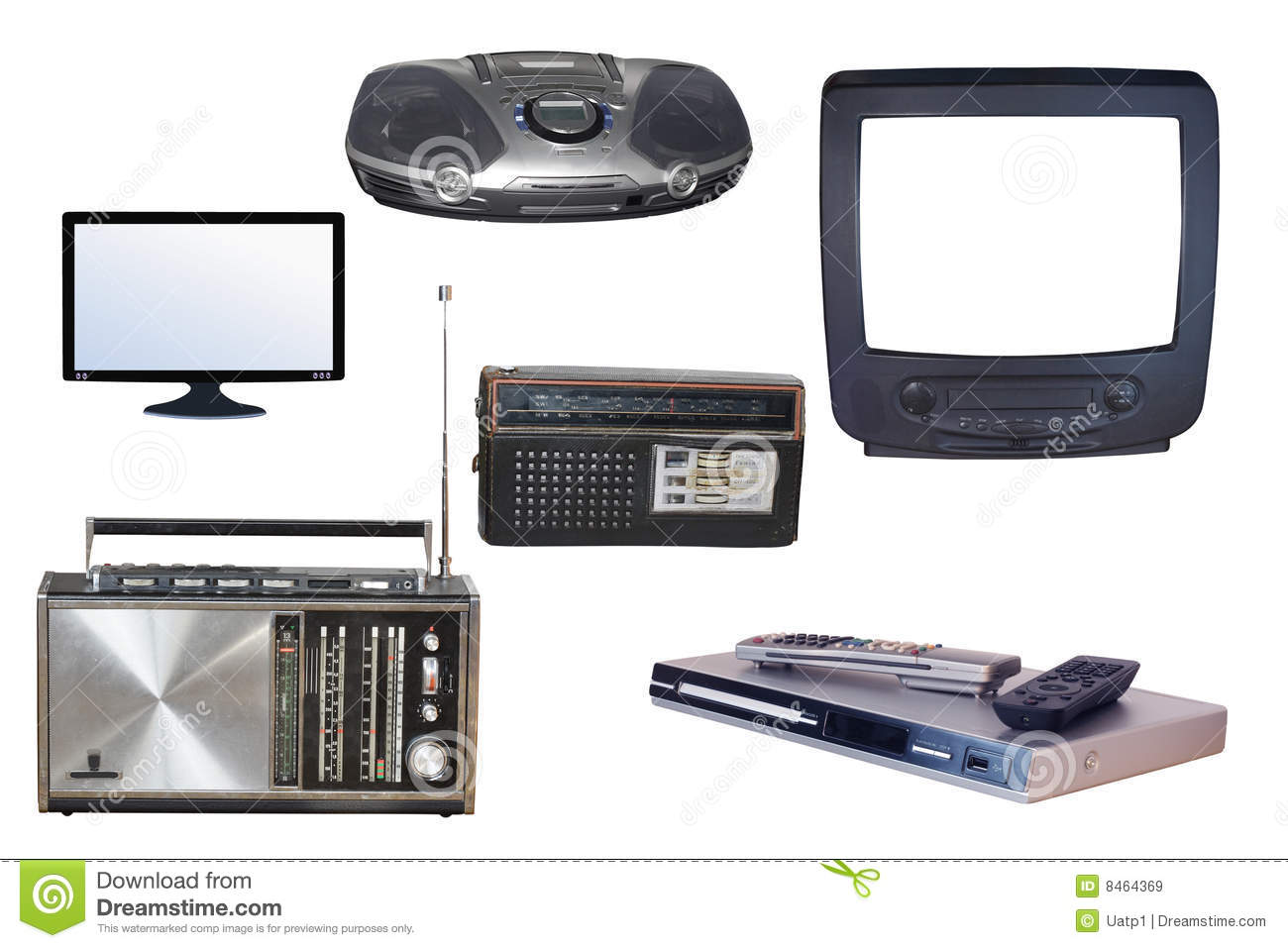
Moral of the story
- Think about the customer situation
- Formulate the problem according to the customer situation
- Think systems (not just ideas/products/services)
- Create systems which make business sense
Innovation
- Customer Desirability
- Technical Feasibility
- Business Viability
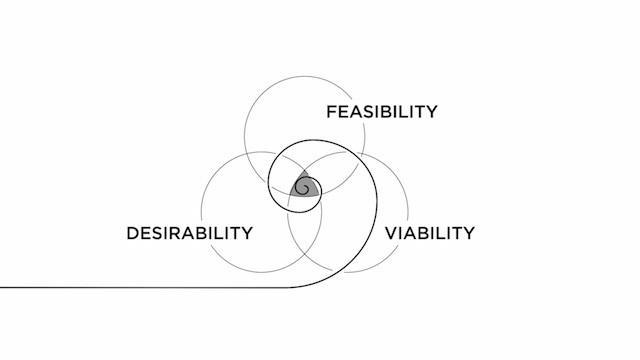
Source - Ideo's model - https://www.ideou.com/blogs/inspiration/how-to-prototype-a-new-business
Task 0 — One slider/pager
- Pick an innovation project you'd like to work on (this is yours for the whole course)
- Describe it as if explaining to your grandparent
- Give it a catchy/fancy title
- Write it as a How Might We — name the existing product/service
- E.g. — How might we keep a lone woman safe in a taxi at night? (Uber)
- Upload to the uploads shared folder (Google Drive):
FirstName-LastName-Task0
We'll do this together at the end — you'll get 30 minutes + time to talk it through with me.
What in the world is Compassion?
Open an image search engine and type
- compassion
- empathy
Note what is common among the images
Hand, Heart, Feelings, Action
Compassion = ❤️ + 🫱
Why does one feel bad when another person is suffering?
Watch this - https://youtube.com/watch?v=3qrShIMtYJU
How can one effectively grasp the emotions experienced by others?
Watch this - https://youtube.com/watch?v=ZbEjG_8YE_M
Design Thinking = Compassion + Innovation
Two Scenarios
Starky or Thana Rosa?
Which approach would you like to adopt for your projects?
How do organizations innovate?
Ideas implemented should lead to sales/revenue from the customer
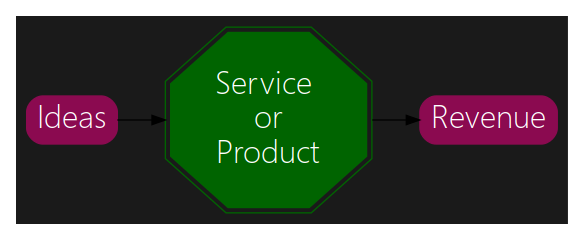
Ideas are meant to solve problems
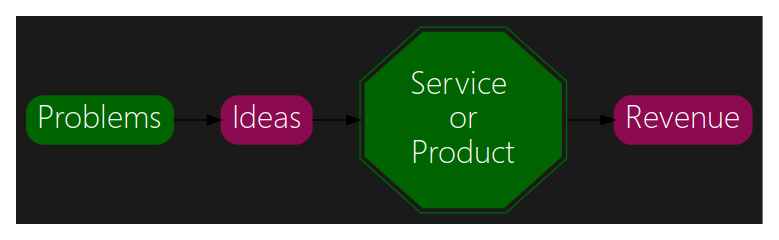
Whose problems?
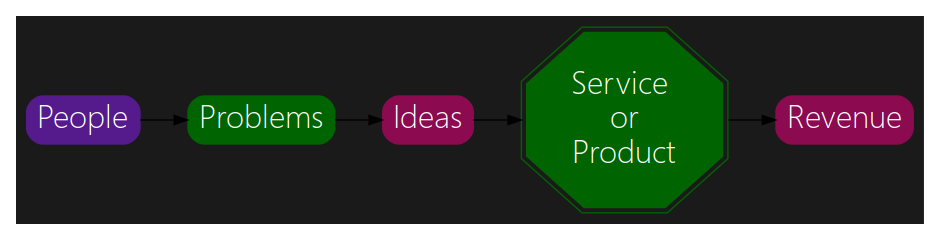
Not many will like untested products
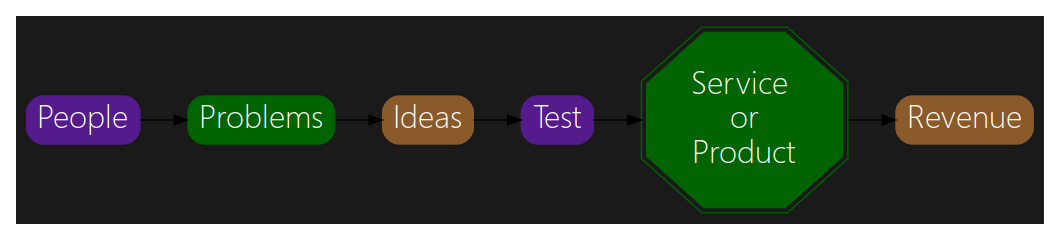
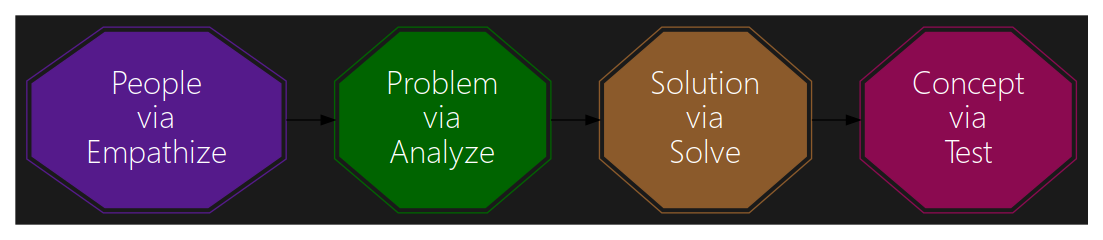
A Four Step Efficient and Systematic Process called Design Thinking
Four Noble Truths
- Dukkha — Acknowledge that there is suffering
- Samudaya — Delve into the cause of suffering
- Nirodha — Think of ways to end the suffering
- Marga — Walk on the path to end the suffering
4 Phases of Design Thinking
- Dukkha
- Samudaya
- Nirodha
- Marga
- Empathize
- Analyze
- Solve
- Test
- "Don't take my word, apply this for yourself"
- "cycles"
What are "cycles" in an organization?
Go EAST for Design Thinking

Patient-Centric Design Thinking
Watch this - https://youtube.com/watch?v=FkJD9bYS-As
Uploads folder + Shared space

Recap — today in one screen
- Design Thinking = Compassion + Innovation, in 4 phases — EAST
- Your project, your buddy (company, not co-owner), graded on a published checklist
- AI is your partner — use it, cite it, never invent customers
Next: pick the project you'll live with for 4 weeks.
Now: your project — 30 minutes
- Pick an innovation project you'll own all course (see Task 0)
- Describe it like you'd tell your grandparent · give it a catchy title
- Frame it as a How Might We — name the existing product/service
- Talk it through with your studio buddy
Then I'll share the drive / upload link, and we'll talk your idea through together.
Time:
Reflection time
- what did you enjoy doing?
- where did you struggle?
- what did you learn?
Time left for reflection:
How every phase runs
Your first answer is never the graded one. The jump is the point.
Session 2 · Empathize — Method, CJM & First Red Tests
By the end of Session 2 — you'll walk out with…
Method, CJM & First Red Tests
Red — your first points are live now (no learning yet!)
A 10-year-old plays games on her tablet for hours, snacks while she plays, and rarely goes outside.
In 3 lines: what does she actually NEED?
https://forms.gle/qKmuRJThCCqUAGSx8
Hard? Good — that's the point. We learn the tool, then you redo it. 😀
Time Remaining:
Watch this - https://youtube.com/watch?v=9_1Rt1R4xbM
How do you empathize with a person?
How do you communicate that empathy to another person?
Empathize through visual storytelling
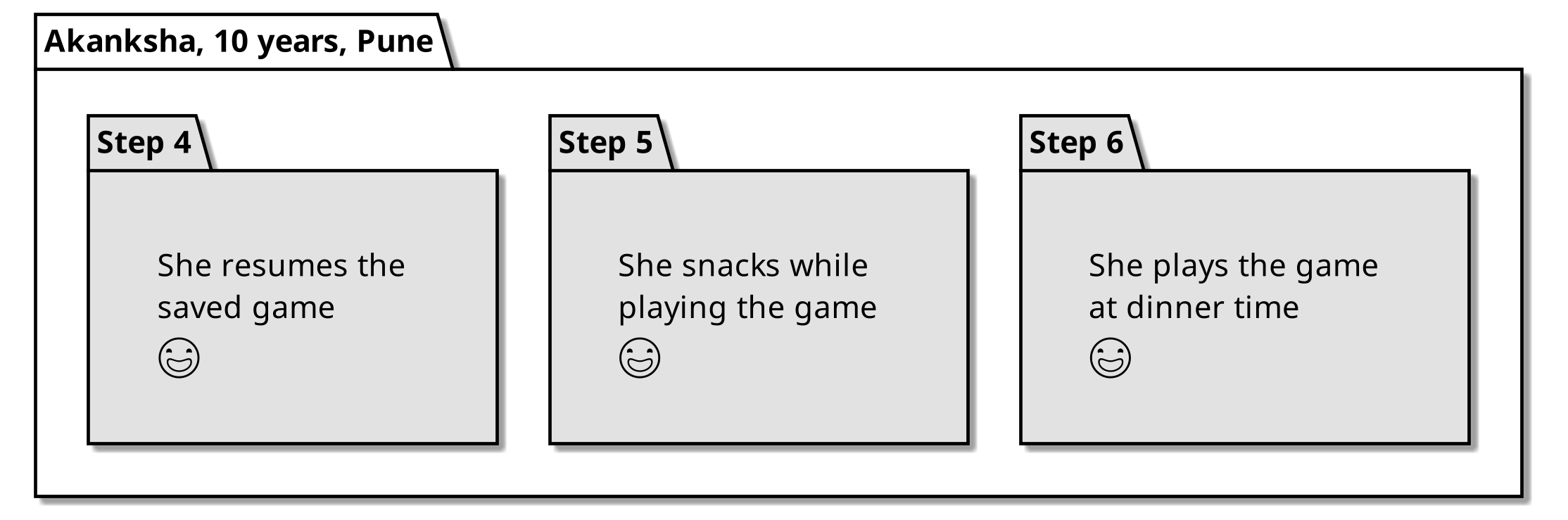
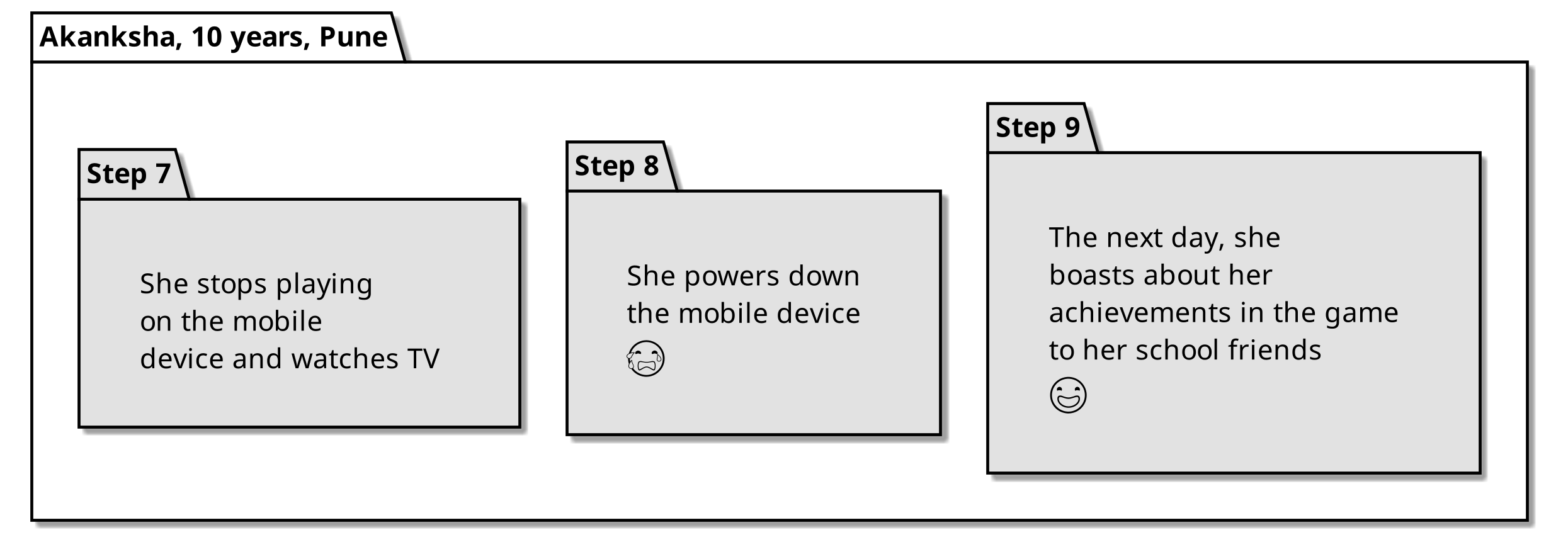
Customer Journey Mapping (CJM) is the tool we'll use to collect and tell the story of our users
Kid Mobile Case Study

The kid's persona
Name: Akanksha
Gender: Female
Location: Pune, India
Age: 10
Description: Lives in Pune with her elder brother and parents. Loves chocolates, aspires to be a
badminton player, hates assignments and exams. Owns a tablet, would like a pet.
Customer Journey Map — Before
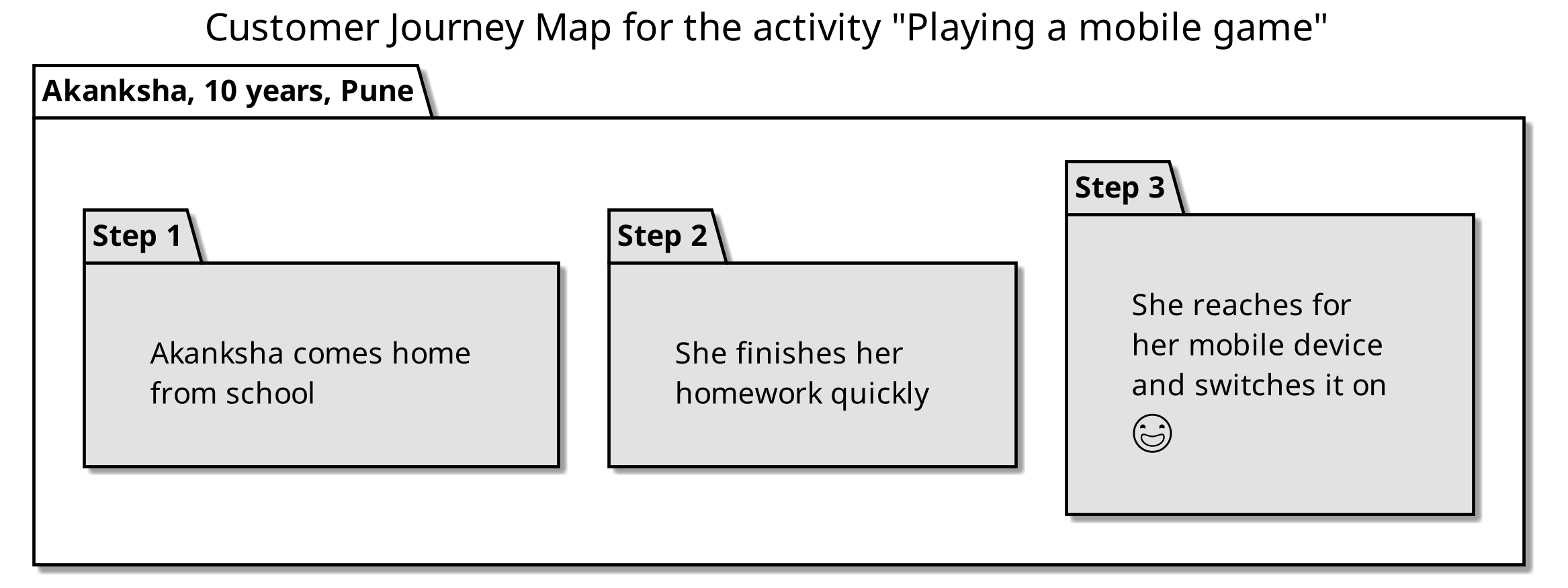
CJM — During
CJM — After
List of problem statements
- The kid plays on the mobile for most of her spare time
- She snacks/eats while playing on the mobile
- She spends very little time playing outdoors
Customer Journey Mapping
- Write the customer's activity
- Write the major steps of the user experience
- Split the story into 3 — Before, During and After
- Mark the emotional highs and lows (😄 and 😞)
Say the pain as a test — Given / When / Then
The CJM in one testable line — current behaviour, no solutions:
- Given Akanksha has free time and a tablet,
- When she reaches for something to do,
- Then she plays indoors for hours and skips going out 😞
This is your Red — the pain you'll later prove you fixed. Still no solutions here.
All three pains — each becomes a Red test
Same move for every pain on your CJM — current behaviour, no solutions:
- Given free time + tablet in reach, When she looks for something to do, Then she defaults to the tablet for hours 😞
- Given she's deep in a game, When she feels like eating, Then she grazes at the screen, not noticing how much 😞
- Given a free afternoon + good weather, When she picks what to do, Then she stays indoors and skips badminton 😞
Each asserts a desired outcome that isn't happening yet — that's why it's Red.
What a Red test is for
- Make it falsifiable — a pain you can't fail is an opinion, not a test
- Run it on your 3 real customers — does the real person actually fail it? Pain confirmed (Red is real). If they already pass it, it's not their pain — drop or rewrite it
- That's the anti-fabrication rule in test form: a Red test proves you didn't invent the problem 🚫🤖
Green isn't now. You turn it Green only in Test / Iterate — re-run the same scenario on the same customer and the Then lands on 😊 (she picks up the racket). Proven by the customer, not by AI.
Session 2 - Work Out
A timed working block. Pen & paper / your own doc — AI comes in S4.
- Lock your project with your buddies — say it out loud as a How Might We (15 min)
- Hypothesis CJM — sketch your customer's Before · During · After from what you guess today (30 min)
- Write your Red tests — Given / When / Then, current behaviour, no solutions
- Buddy swap — attack each other's tests: could the real person already pass this? (15 min)
This is a hypothesis, not the truth — carry it to the field as your interview checklist: guesses to confirm or kill. 🚫🤖
Session 3 · Empathize — Interview Craft, Rehearse & Launch
By the end of Session 3 — you'll walk out with…
Red — write your 3 questions cold (no learning yet)
You meet your customer this weekend. Write the 3 questions you'd ask to find out whether your CJM is true.
Keep them — we'll sharpen them by the end of today. 😀
Time remaining:
What you carry into the field — a hypothesis
From Session 2 you hold a CJM, problem statements, and a list of Red tests — all of it guesses.
Field work is where you confirm or delete each one. Go in as a scientist trying to prove yourself wrong — not a salesperson fishing for a yes.
Today: sharpen your interview → turn your Red tests into a field guide → rehearse it → launch.
Customer interactions
Quiz — which question keeps you honest?
Round 1
A. "Walk me through yesterday afternoon"
B. "Does she struggle to get herself outside?"
✅ A. B names the answer you're hoping for — she'll just nod. → Rule: ask non-leading questions
Round 2
A. "Do you think the app is easy for her to use?"
B. "Show me how she'd use it right now." — then watch, say nothing
✅ B. What people do beats what they claim. → Rule: observe > interrogate.
Round 3
A. "Tell me about the last time she played on the tablet."
B. "Do you usually let her snack while she plays?"
✅ A. A real episode beats a tidy summary — and "usually" invites a flattering fiction. → Rule: ask for stories, not habits.
Round 4
She says: "She just likes the tablet, that's all." What do you do?
A. Note it and move to your next question
B. "Why do you think that is?
✅ B. The gold is two questions deeper. → Rule: ladder down (curiosity at work)
Round 5
A. "What if there were an app that nudged her outside — would that help?"
B. "What if your daughter can have fun and be off the mobile?
✅ None. The moment you pitch, the interview is dead — now she's being polite. → Rule: never pitch your solution.
Scoreboard — the 5 rules you just earned
- Non-leading
- Observe > interrogate
- Ask for stories
- Ladder down
- Never pitch — and give more than you receive, let them get comfortable.
Talk to 3 customers minimum. Anyone not from UP, age ±15 years from yours. More = Empathy Ace badge.
Customer Interaction Tips Video
Watch this - https://youtube.com/watch?v=KZYntTU3JW4
Turn your Red tests into a field guide
For each hypothesis from Session 2, write the question or observation that could disconfirm it — never name the answer you want:
| Hypothesis (a Red test) | Disconfirming probe — your field instrument |
|---|---|
| She defaults to the tablet for hours | "Walk me through yesterday after school — what first, then next?" |
| She snacks nonstop, unaware | Watch a play session; after, ask "what did she eat today?" |
| She stays indoors, skips badminton | "Tell me about last Saturday afternoon." (don't mention badminton) |
That one page is your interview guide.
AI move (pre-field): ask AI to draft an interview guide from these hypotheses, then "which of my questions are leading? rewrite them neutral."
Dry-run — rehearse the interview
Don't let your first interview be with your precious real customer. Rehearse today:
- Interview your studio buddy for 10 min — use your field guide
- Buddy gives feedback on leading questions + the follow-ups you missed
- Swap and repeat
- Tighten your guide from what you learned
Now your first real interview won't be your first interview ever. 🎯
Launch — your one piece of real "homework"
- Over the Jun 19–21 weekend, go out and meet your 3 customers (more is better)
- Your studio buddy comes along — company, courage, and a second set of notes
- Bring back: notes, photos/video (with permission), and direct quotes
- We open the Empathize showcase the moment we're back, Mon Jun 22
Task 1A: Empathize This (1/2)
- Interview guide
- The one-pager you built today — each hypothesis paired with a disconfirming probe (your field instrument)
- Interview guide
- Note which of your questions were leading and how you made them neutral
- Field work
- Interact with at least 3 customers (more is better)
- Field work
- Anyone not from your UP class; age ±15 years from yours
- Field work
- Bring back notes, photos/video (with permission), and direct quotes
Task 1A: Empathize This (2/2)
Create a presentation with the following:
- CJM
- Create personas (name, gender, age, location, occupation, family)
- CJM
- Write the customer activity
- CJM
- Before / During / After, with emotions and photos of the customer
- Problems
- List the problem statements — no solutions, please
Task 1B: Empathize That
Create a video:
- A short video (2–5 min) — a skit highlighting the customer's current status
- Use human actors (no AI/avatars/cartoons)
- Minimize dialog; use your CJM as the script
- Upload the video link with your portfolio
Checklist for Empathize
[ ]Interview guide — disconfirming probe per hypothesis, leading questions fixed[ ]Customers — at least 3[ ]CJM — persona(s) with name, gender, age, location[ ]CJM — main activity of the customer[ ]CJM — 3 sections: Before, During, After[ ]CJM — emotions (smileys/sadeys present)[ ]Problems — listed[ ]Problems — NOT solutions[ ]Uploaded: presentation + video
Refactor — sharpen your 3 questions
Reopen the portal. Rewrite the 3 questions you wrote cold this morning.
- Which were leading? Make them neutral.
- Which fish for an opinion? Turn one into "tell me about the last time…"
The gap between your Red and your Refactor is today's learning. 🎯
Session 4 · Empathize — Showcase
By the end of Session 4 — you'll walk out with…
Back from the field — turn raw notes into a CJM
You've met real people. Now — and only now — AI earns its place: it organizes what you actually heard.
AI move — Empathize after you've met real people
- First, you met your 3 humans. Now paste your raw notes/transcripts → ask AI to draft a CJM (Before/During/After) and cluster pains into themes
- Ask it to scaffold a persona — then fix every field against the real person you met
- ⚠️ If AI invents a quote, a name, or a "typical user" you never met — delete it. That's fabrication.
- ⚠️ AI gives you the average customer; your marks come from the specific one. Verify, don't trust.
Cite it: one line — "AI clustered my interview notes; personas verified against real customers."
Worked example — notes → prompt → AI draft
Your raw notes (one real customer): Akanksha, 10, Pune. Home from school → tablet games for hours. Snacks while playing. Rarely goes out. Loves badminton but "too tired". Parents frustrated
Paste them into AI with this prompt:
You're my Design Thinking assistant for the Empathize step.
Below are my RAW notes from ONE real customer I interviewed.
1) Draft a Customer Journey Map — Before / During / After, with an emotion (happy/sad) at a step that has emotions.
2) List problem statements — the PAIN only, NO solutions.
3) Flag anything you INFERRED that is NOT in my notes, so I can verify.
Rules: do not invent quotes, names, or facts. Use only my notes.
NOTES: <paste your notes here>
AI draft you then verify:
Before tablet after school — excited 😊
During hours of play + snacks, skips outdoors — absorbed → restless 😞
After parents nag, homework undone — tension 😞
Problems:
- free time defaults to screen
- no easy off-ramp to go outside
no parental guardrail
⚠️ Inferred — verify with her: "too tired for badminton"
Showcase format
- In your room of 5: 4 min present + 2 min peer feedback — everyone, every phase
- Main stage (the roulette champions): 6 min present + 3 min Q&A
- Audience questions earn Live-Engagement XP
Empathize Roulette — pick the room champions
Presentation focus this phase — Story
- Open with one customer, by name, in one human moment
- Walk us through the journey — let the 😄 and 😞 do the work
- No solutions yet — leave us feeling the problem
Criteria — Empathize portfolio (/10)
- Checklist completeness (50%)
- Video (15%)
- Subjective quality (20%)
- Customer evidence (15%)
How the room works each phase
- Breakout presentations — 6 rooms of 5; everyone presents 4 min + 2 min peer feedback
- Peer-review round — Rank your roommates on the checklist (earns your peer-review marks)
- Roulette to the main stage — the wheel sends one champion per room to the whole class
- Everyone uploads their own portfolio to Shared Drive; the AI grades all of them
Reflection time
- what did you enjoy doing?
- where did you struggle?
- what did you learn?
Time left for reflection:
Session 5 · Analyze — Multi-Why
By the end of Session 5 — you'll walk out with…
Analyze — Multi-Why
Red — dig before we teach you how
First 10 minutes, from your UP login: https://forms.gle/ZtuNQ1LpV1MpfxKQA
Multi-Why
This method is also known as Toyota's 5-Whys approach.
Watch this - https://youtube.com/watch?v=N7cR2gArCFE
The Why Chain
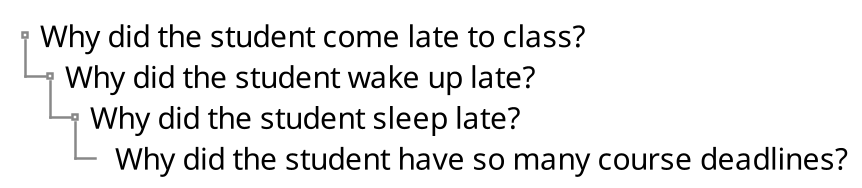
Case Study: Application of Multi-Whys
- Why 1: Why does the kid play on the mobile for such a long time?
- Ans: To gain experience (XP) points.
- Why 2: Why does the kid want to gain XP points?
- Ans: These are rewards that the kid can brag about to friends.
Case Study: Application of Multi-Whys
- Why 3: Why does the mobile app reward the kid for experience?
- Ans: Rewards keep the kid addicted to playing the game.
- Why 4: Why are children exposed to such addictive mobile apps?
- Ans: A lack of control mechanisms exposes children to all apps.
From symptom-Red to root-Red — the baton from Empathize
Your Red test names a symptom. Build at the symptom → you get a band-aid (the "screen-time lock app" everyone leaps to).
Multi-Why drills the Then of the test:
Then she stays indoors → why? badminton needs a partner → why? nobody free at short notice → why? no way to see who's around right now → root: no low-friction way to find a nearby playmate on demand
Now rewrite the test at the root:
- Given a free afternoon, When she wants to play badminton, Then she finds a partner within 10 min
That root-level test — not the symptom — is the one you carry into Solve and try to turn Green.
Task — Analyze This
Add to your presentation:
- Take the problems from the Empathize stage
- Apply Multi-Why analysis on all of them
- Tip — No solutions, please
- Chain the whys; branch where it makes sense
Analyze This — Checklist
[ ]Chain of why statements rather than independent whys[ ]> 5 levels of analysis (optional)[ ]Branched multi-whys (optional)[ ]not listing solutions
Session 6 · Analyze — Conflict of Interest
By the end of Session 6 — you'll walk out with…
Analyze — Conflict of Interest
Take one item from your list of new problems (from MW)
What would you like to improve in the system?
What stops you from achieving this improvement?
What you just framed is a…
Conflict
Where can we learn how to define a conflict of Interest?
All that is fine, but where is conflict used on an almost daily basis?
Why so serious?



The Matrix
The conflicts
- If
- Morpheus reveals code,
- then
- agents hack into Zion's mainframe,
- but
- Zion is more important than Morpheus
- If
- tank pulls the plug,
- then
- Zion's codes will not be revealed,
- but
- Morpheus will die
Bhool Bhulaiyya
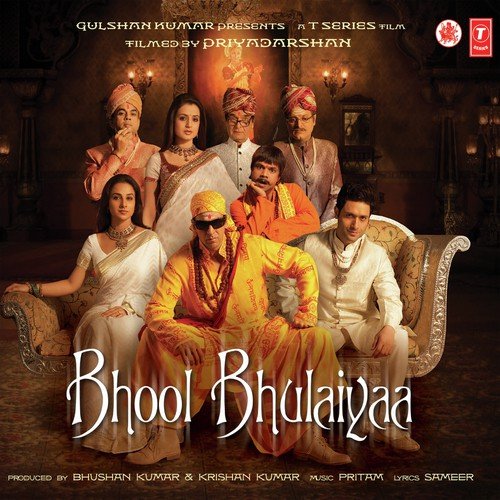
The clip
The conflict
- If
- Manjulika (Avni) kills "Siddharth",
- then
- her revenge is complete (and Avni is cured of her illness),
- but
- Avni loses her husband
Source - https://trizindia.org/2009/09/triz-in-films-ideas-for-fooling-filmi-ghost/
Conflict or Contradiction Model
- If
- <Thing happens or Action taken>
- Then
- <Positive Consequence>
- But
- <Negative Consequence>
Same shape as Given / When / Then
- If a thing happens ≈ Given/When a situation occurs
- Then a good consequence ≈ Then the outcome you want
- But a bad consequence = the tension your solution must resolve
Your HMW is just the Then you're aiming for — your future acceptance test.
Put on your movie critic's hat
- Think of a movie or novel you really liked
- Pick a scene you liked
- Find the conflict the character faced
- Represent it in the model (If… Then… But…)
Time left:
Fine Formulation — Zone & Time of Conflict
- Zone — the space where the conflict occurs (e.g. 3–5 cm around the tyres)
- Time — the moment the conflict occurs (e.g. 150 ms before impact)
Conflict of Interest — Kids Mobile Case Study
- If
- kids are given access to too many apps
- then
- they have more freedom to discover new apps
- but
- there's no parental control over the type of apps
So the problem becomes — How might we give more freedom to kids while retaining parental control?
- Zone — around the "Install" button · Time — at the moment of installation
Task — Analyze That
Add to your existing presentation:
- Take the problems from the Multi-Why stage
- Mark the level of the problem you'd like to solve
- For each, ask "What would you like to improve?" and "What stops you?"
- Frame each as a conflict (If… Then… But…)
- Write each desired result as a How Might We question
- Note the zone and time of conflict
Analyze — Checklist
[ ]The key Whys/problems from Multi-Why[ ]Conflicts defined for each (If/Then/But)[ ]Positive and negative consequences stated[ ]Desired results as How-Might-We questions[ ]Zones and times of conflict
AI move — Analyze with a skeptic at your elbow
- Feed your problem → ask AI to push the Multi-Why deeper ("ask why 3 more times; branch where it splits")
- Ask it to propose If/Then/But conflicts and map them to TRIZ-40 parameters
- ⚠️ AI loves a tidy, plausible, wrong root cause. Every why is a hypothesis — check it against what your customer actually said.
- ⚠️ A why-chain that reads beautifully but contradicts your CJM is a red flag, not a win.
Best use: AI gives you more whys and conflicts; you keep only the ones the real customer would recognise.
Worked example — problem → prompt → Multi-Why + conflict
Your input (one problem from Empathize): "Akanksha defaults her free time to tablet games and skips going outside."
Prompt to the AI:
You're my Design Thinking assistant for the Analyze step.
Here is ONE customer problem from my real field work: <paste it>
1) Build a Multi-Why chain (Toyota 5-Whys) — each why caused by the next;
   branch if it splits. NO solutions.
2) From the deepest why, frame ONE conflict as If... Then... But...
3) Turn it into a How-Might-We question, and name the zone + time of conflict.
4) Flag any why you INFERRED that my problem statement does NOT support,
   so I can verify it with her. Do not invent facts.
AI draft you then verify: Why play? → instant reward · Why want it? → brag to friends · Why brag? → wants to belong · Why screen over outdoors? → screen is frictionless, outside needs setup. Conflict — If we cut tablet time, Then she goes outside more, But she loses the social reward she values. HMW — How might we give her the social reward without endless screen time? Zone/time — the first 10 min after she gets home. ⚠️ Inferred — verify with her: the "wants to belong" why.
Refactor — sharpen your conflict
From your own login: post your sharpest If/Then/But and the HMW it produces.
Compare it to your rough Red attempt this morning. Sharper? That delta is today's learning. 🎯
Session 7 · Analyze — Showcase
By the end of Session 7 — you'll walk out with…
Analyze — showcase
Presentation focus this phase — Structure
- One clear claim per slide; say it as a headline
- Lead the audience: problem → why → the conflict → the HMW
- Signpost: "First… then… which means…"
Showcase format — same as every phase
- Rooms of 5: everyone 4 min + 2 min feedback (recorded) → roulette champions 6 + 3 on main stage
Criteria — Analyze portfolio (/10)
- Multi-Why depth & chaining (30%)
- Conflicts (If/Then/But) for each problem (30%)
- HMW questions + zone/time (20%)
- Subjective quality (20%)
Roulette — pick the room champions
▸ End of Session 7
Session 7 complete — Analyze showcased. Phase 2 portfolio is due.
Next — Session 8 · Presentation Skills
Reflection time
- what did you enjoy doing?
- where did you struggle?
- what did you learn?
Time left for reflection:
Session 8 · Presentation Skills
By the end of Session 8 — you'll walk out with…
Today we work on the skill
You're brilliant with your hands. Now we make you just as good at talking about your work.
We're halfway. You've presented twice. Today we fix what's been holding you back.
The 4 things that carry a talk
- Story — one human, one moment, one change. Not a feature list.
- Structure — one idea per slide; tell us where we are.
- Delivery — pace, pause, eyes to the camera, hands still.
- Slides — picture > paragraph; 6 words, not 60.
Handling Q&A
- Repeat/rephrase the question (buys you time, helps the room)
- "Great question" + a short answer beats a perfect long one
- Don't know? "I haven't tested that yet — here's how I would." 👍
Workshop — rehearse on your own material
- In breakouts, give your Analyze pitch again — 120 seconds, story-first
- Your buddy scores you on the rubric and gives one thing to keep, one to change
- Swap. Then redo your 120 seconds with the one change.
▸ End of Session 8
Session 8 complete — you have a sharper way to tell your story.
Next — Session 9 · Solve — Brainstorming & TRIZ
Reflection time
- what did you enjoy doing?
- where did you struggle?
- what did you learn?
Time left for reflection:
Session 9 · Solve — Brainstorming & TRIZ
By the end of Session 9 — you'll walk out with…
Silent Brainstorming
- Write down all ideas for your desired results
- Keep track of the number of ideas
- Set a target number of ideas and beat it
Time left:
Теория Решения Изобретательских Задач
Теория Решения Изобретательских Задач
TRIZ
TRIZ Nina Videos
TRIZ Philosophy
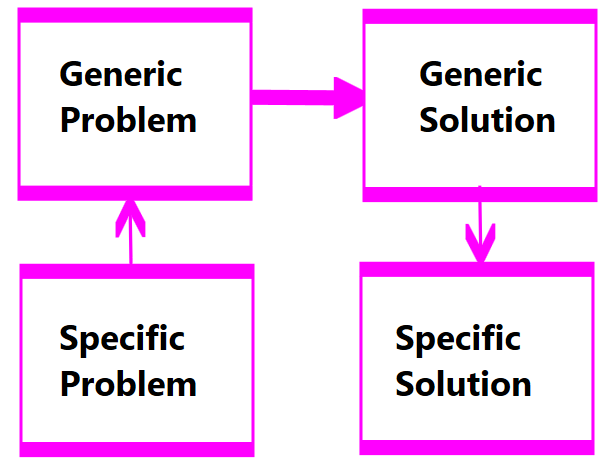
The system
A luxury car's battery system
The Contradiction
- If
- a massive battery for long range driving is added,
- then
- it provides long-distance luxury travel,
- but
- the added weight increases braking distance.
So the problem becomes — How might we reduce the braking distance?
Step 1: Draft your conflict in specific terms
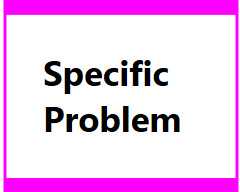
- Range vs.
- Braking distance
Step 2: Define the conflict generically
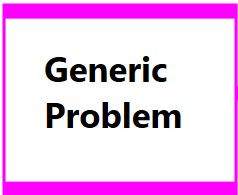
Tip — the mapping of parameters needn't be exact
Step 3: Find generic solutions from the Matrix

Step 4: Generate the specific solution for your problem

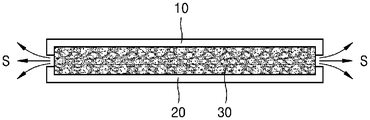
Pulsed Electromagnetic Braking (TRIZ 19: Periodic Action) — a brake that uses DC pulses to latch and hold, cutting continuous current and power loss.
Case Study: Ideas
- Separate login for parents
- Physical app store with parents holding the keys
- Parents hold the main objective of the game
- Game save cannot happen without parental permission
Task — Solve This
- Silent-brainstorm ideas that chase your root-cause problems (from Analyze); tag each idea with the problem it hits — 8+ good, 12+ excellent
- TRIZ the contradiction blocking your hardest problem (4-stage philosophy; an LLM may help) — https://www.triz40.com/TRIZ_GB.php
- Combine the strongest ideas from both methods into one concept
Hold the concept — you'll turn it into acceptance tests next session, before you build.
▸ End of Session 9
Session 9 complete — a divergent set of ideas, TRIZ-pushed, converged into one concept.
Next — Session 10 · Solve — tests, pitch & dissent
Reflection time
- what did you enjoy doing?
- where did you struggle?
- what did you learn?
Time left for reflection:
Session 10 · Solve — Tests & Pitch
By the end of Session 10 — you'll walk out with…
Write the test first
Before you build anything, write 2–3 acceptance tests your prototype must pass:
- Given a parent sets up the tablet, When the kid opens a new app, Then it needs a parent OK
Plain language, customer's point of view. If you can't test it, it isn't done.
This is your Red. Next you build only enough to turn these Green.
AI move — your tests become the build spec
- Brainstorm co-pilot: race the AI for volume — a generic idea is worth nothing; cross it with TRIZ + your customer
- TRIZ helper: ask AI to map your conflict to the 40 principles, then sanity-check on https://triz40.com
- Tests = build spec 🚀: your 2–3 Given/When/Then tests are your build checklist — and the executable spec you hand to Antigravity/Claude Code: "Build the simplest app that passes these." Write them first; the agent builds only enough to turn them green. Red → Green, for real.
Worked example — HMW → prompt → ideas + tests
Your input (from Analyze): "How might we give Akanksha the social reward without endless screen time?"
Prompt to the AI:
You're my Design Thinking assistant for the Solve step.
My How-Might-We: <paste it>.  My conflict: <paste If/Then/But>.
1) 8 ideas — tag any TRIZ principle each one uses.
2) Consolidate the best into ONE concept (one paragraph).
3) 2-3 acceptance tests (Given/When/Then) — a STRANGER could observe
   the Then; do NOT name my solution; plain customer language.
4) Assumptions I must verify with a real customer. Invent nothing.
AI draft you then verify: Ideas: outdoor "social streak", friend-match after play, parent-set play budget… (TRIZ 1 Segmentation, 10 Prior Action). Concept: a gentle screen budget that unlocks a friend meet-up outdoors. Test — G Akanksha has free time at home, W her usual play session ends, T within 15 min she's outside, active, with a friend. ⚠️ Verify: that she values an outdoor social reward at all.
Task — Write your tests
- Bring the one concept you built last session (Session 9)
- Turn your root-cause problems (from Analyze) into 2–3 green targets — flip the Then, make it measurable
- Lock those green targets as your 2–3 acceptance tests (Given/When/Then) — before building. You don't move them afterwards.
Task — Solve That (investor pitch)
For the next round with your "Investor", create a new presentation (~5 minutes):
- Empathize — a simple customer story
- Analyze — your main problem/conflict
- Solution — the USP of your solution (+ a short feature list)
- Improvements / advantages (think metrics, numbers) — for user and investor
- Plan of action (prototyping + milestones with time)
- Support you need from the investor (network, funding, people)
Solve — Checklist
[ ]Green targets set (Red Then flipped, measurable, root-level)[ ]Ideas from silent brainstorming (8+ good, 12+ excellent), each tagged to a problem[ ]Ideas from TRIZ methodology (conflict drawn from a root-cause problem)[ ]Consolidated concept[ ]2–3 acceptance tests (Given/When/Then) written before prototyping[ ]New investor presentation
Criteria — Solve portfolio (/10)
- Silent brainstorming volume (15%)
- TRIZ genuinely applied (20%)
- Novelty of the idea (20%)
- Prototypability (15%)
- Acceptance tests (Given/When/Then) before prototype (15%)
- Consolidated concept (15%)
Bullet Proofing
Rules for the Presenter
- Present your concept to a small group (one-way, ~5 min)
- Note all feedback in your notebook (one-way, ~3 min)
- Go back and address all feedback
- No arguing with the dissenters
Method courtesy: http://cognitive-edge.com/methods/ritual-dissent/
Rules for the Dissenters
Give negative feedback on
- Presentation style
- People — empathy
- Problem — analysis
- Solution — novelty, implementation
- Advantages — for user/customer and investor
Presentation focus this phase — Persuasion
- Lead with the change you create, not the mechanism
- One memorable number
- Ask for something specific at the end
Refactor — your tests are your spec
From your own login: post your 2–3 acceptance tests (Given/When/Then).
Next you arrive with a prototype built to pass them — and we find out if it does. 🔴→🟢
▸ End of Session 10
Session 10 complete — concept chosen, tests written, pitch survived dissent. Phase 3 portfolio is due.
Next — Session 11 · Test — prototyping & AI build
Reflection time
- what did you enjoy doing?
- where did you struggle?
- what did you learn?
Time left for reflection:
Session 11 · Test — Prototyping & AI-assisted Build
By the end of Session 11 — you'll walk out with…
Prototypes
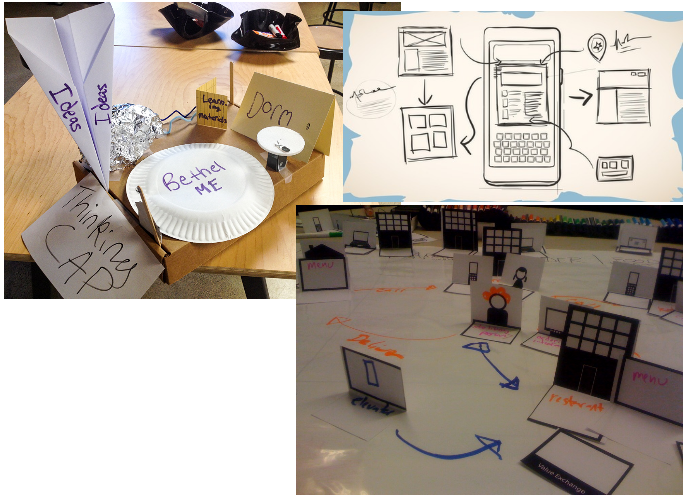
In this step
- Build a very basic prototype
- Take your prototype to the user and observe how they react
- Photograph/videograph their reactions (with permission)
- List the problems the customer faces with this new prototype (Test.v1 / Empathize.v2)
- Run each acceptance test on a real customer — mark it PASS or FAIL
Physical prototype? Use a lab
- Physical prototype? Book a lab for the Thu Jul 09 workshop day or the Jul 10–12 weekend
- Take your studio buddy — safer and faster with two pairs of hands
- For apps: Figma / Draftbit. For services: roleplay + flow diagrams.
- Low-fidelity is fine — clay, cardboard, wires, things lying around
- Build it to pass your acceptance tests, then test on a real customer before the Mon Jul 13 showcase
AI move — build path 🚀: ship a real app
- Point Antigravity / Claude Code / Lovable at your Given/When/Then → it builds a working app
- Push to GitHub → deploy (GitHub Pages / Vercel) → you now have a live URL
- Real customers use the live app, not a mockup
- 🟢 Green = a real customer makes the Then happen on the live app
- 🔴 NOT green = "the agent says all tests pass" or "the build deployed". The AI is not your customer.
Your git commit history is your iteration log — V1 → V2 is right there in the diff. 🏆 Ship It badge.
AI move — partner path: AI helps you make & validate
- AI drafts your Figma flow, your test script
- But a synthetic / simulated "user" is not a real customer — every PASS/FAIL needs a human
Whichever path you took: run each acceptance test on a real person, log PASS/FAIL with evidence. 📸
Worked example — failing test → prompt → commit
Your input (a red test from V1): "Given the daily limit is reached, When Akanksha keeps tapping, Then the app locks and shows the meet-up prompt" — it didn't lock.
Prompt to your build agent (Antigravity / Claude Code):
Here is a FAILING acceptance test for my app (repo is open):
<paste the Given/When/Then>.
1) Make the SMALLEST change that turns THIS test green. No new features.
2) Show me the diff + explain it in 2 lines.
3) Commit with a message that references the test.
Do NOT mark it passing yourself — I test it on a real customer.
Agent output: Plan: lock the game view when timeUsed ≥ dailyLimit. Diff: + LockScreen.jsx, guard in App.jsx. Commit: lock games at daily limit (GWT-3). → You redeploy, hand it to Akanksha, mark PASS/FAIL. ⚠️ The agent saying "tests pass" is not green — Akanksha making the Then happen is. The commit is your iteration evidence.
Quiz
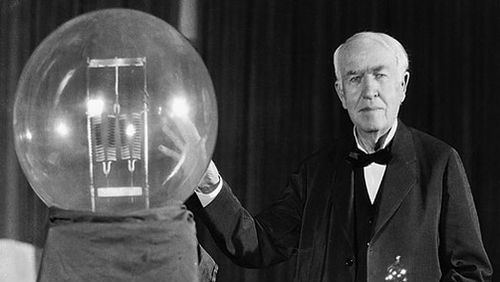
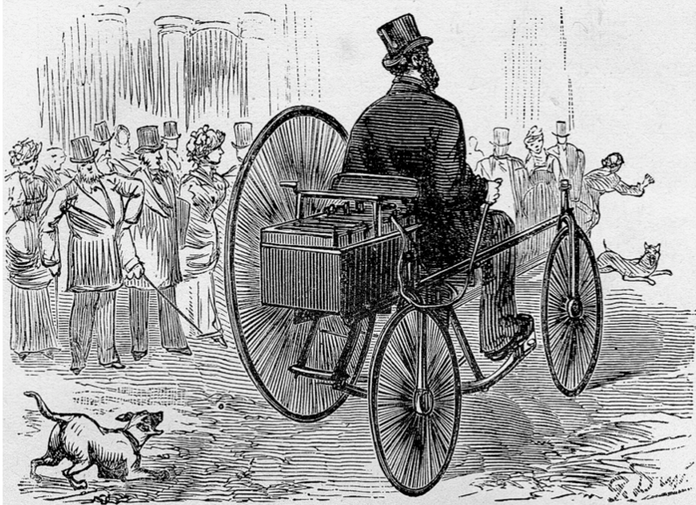
Edison's stepping stones to success
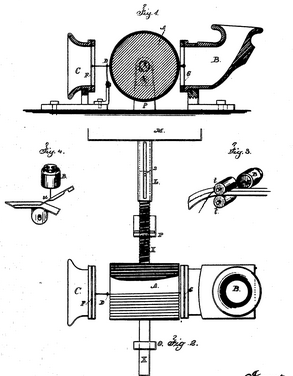
FAILURE
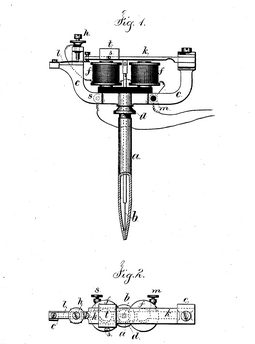
FAILURE
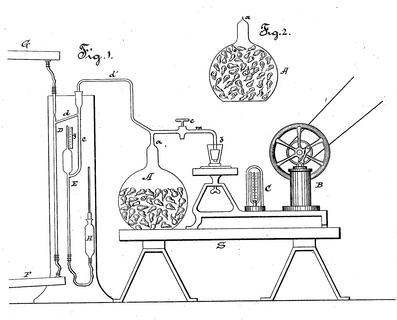
FAILURE
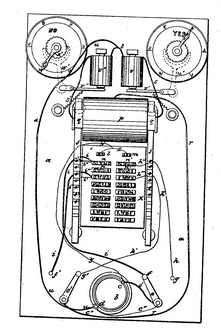
FAILURE
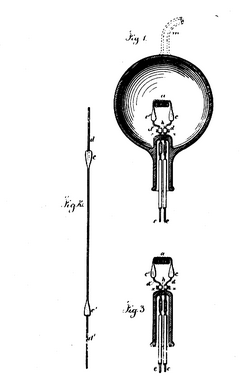
ROARING SUCCESS
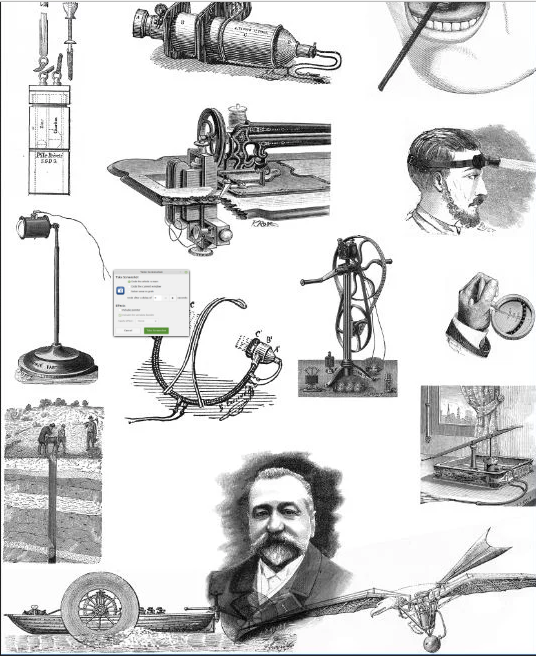
Gustav Trouvé

Task — Test This
- Consider the solutions you generated in Solve
- Make a working prototype with odds and ends
- Make a copy of your existing CJM
- Modify the CJM to include your solution
- Run your acceptance tests with a real customer; record PASS/FAIL + evidence
Task — Test That (Ad)
- Take an advertisement you liked as inspiration
- Make a digital ad (video) selling this product/service to your customer
- Use human actors (no stock footage / AI avatars)
- Use the AIDA principle (max 2 min)
Test — Checklist
[ ]Prototype and demo[ ]Modified CJM- Your CJM CANNOT be all 😀😀
- There must be some new 😳😫
[ ]Feature list[ ]Assumptions listed[ ]User-testing evidence (real customers used it)[ ]Each acceptance test marked PASS/FAIL, with evidence
Test — Criteria (/10)
- Prototype readiness (30%)
- Features list (10%)
- Modified CJM with NEW pain (10%)
- Assumptions (10%)
- Acceptance tests run on customers, PASS/FAIL logged (25%)
- Video/demo (15%)
▸ End of Session 11
Session 11 complete — your AI-assisted build runs in-session; physical builds use the weekend.
Next — Session 12 · Test — run acceptance tests (v1)
Reflection time
- what did you enjoy doing?
- where did you struggle?
- what did you learn?
Time left for reflection:
Session 12 · Test — Prototyping Workshop
Session 13 · Test — Showcase
By the end of Session 13 — you'll walk out with…
Test — showcase
Presentation focus this phase — Demo
- Show the prototype working before you explain it
- Narrate what the customer did, not what you built
- Own a failed test out loud — it reads as credibility, not weakness
Refactor — green or red?
From your own login: which tests went green, which stayed red?
A red test isn't failure — it's your to-do list for Iteration 2. 🔴→🟢
▸ End of Session 13
Session 13 complete — v1 tested on real customers; you know your greens and reds.
Next — Session 14 · Iterate — EAST v2
Reflection time
- what did you enjoy doing?
- where did you struggle?
- what did you learn?
Time left for reflection:
Session 14 · Iterate — EAST v2
By the end of Session 14 — you'll walk out with…
Why two iterations now — because AI makes cycles cheap
- The old way: one painful rebuild took a week. The AI way: a cycle takes an afternoon.
- So this week we go around twice — V2 (Tue) and V3 (Wed) — before the Finale
Each loop is the same EAST: re-observe → re-conflict → re-solve → rebuild → re-test on a real person. 🔁
Red — make the failing test pass
First 10 minutes, from your own login:
Which acceptance test failed hardest in V1?
Write the Given/When/Then your V2 must now pass — that's today's mission.
In this step
- Take your prototype to your customers again and observe them using it
- List the new problems (Empathize.v2)
- Find the conflicts in these problems (Analyze.v2)
- Generate ideas to solve them (Solve.v2)
- Improve the prototype (Test.v2)
- Refactor: make last cycle's failing tests pass — and write fresh ones for the new pain
- Update your portfolio and showcase
Path forward
- Wash, Rinse, Repeat
- EAST, EAST, EAST
- Iterate as many times as you can
Make a presentation covering your entire DT journey of your project (6 minutes)
- Customer story discovered
- Problems uncovered
- Solutions/Ideas generated
- Prototype built (demo) shown
- Improvements made
Finale — Criteria
- Presentation quality (20%)
- Customer representation (20%)
- Problem analysis (20%)
- Improvements in the solution (20%)
- Subjective (20%)
Recorded pitches: graded by the Prof. Live finalists: Prof + guest judge.
▸ End of Session 14
Session 14 complete — V3 done. Phase 5 (Iterate) portfolio shows V2 and V3.
Next — Session 15 · Finale & wrap-up
Reflection time
- what did you enjoy doing?
- where did you struggle?
- what did you learn?
Time left for reflection:
Session 15: Finale & Wrap-up
Now What?
①
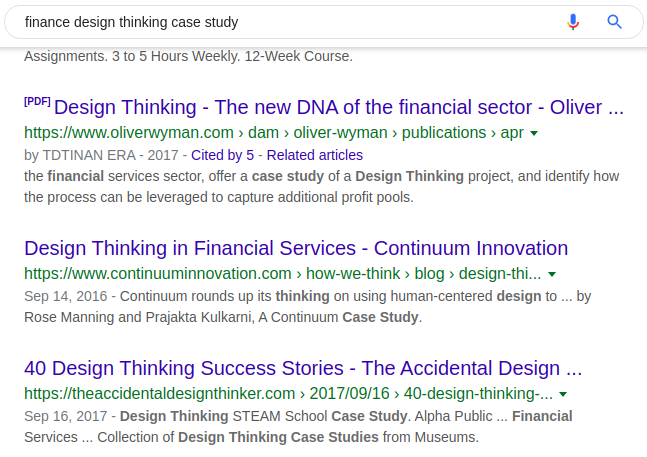
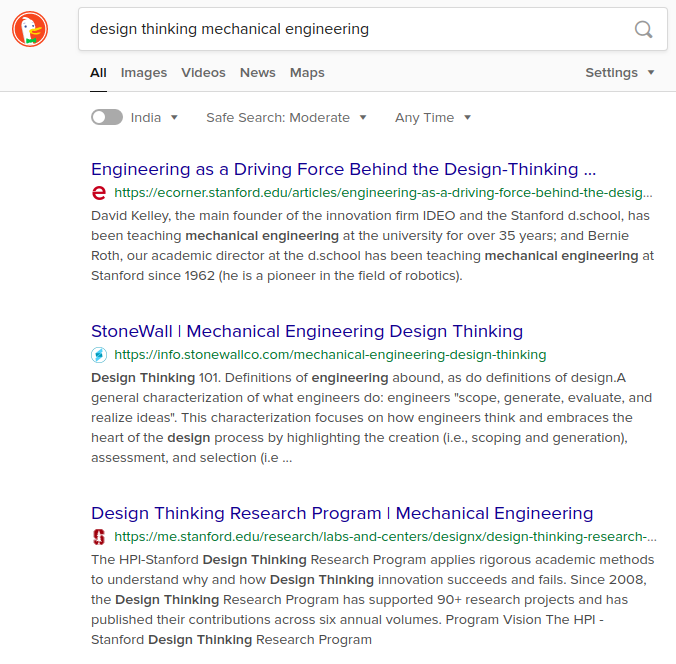
Search for case studies in your own domain
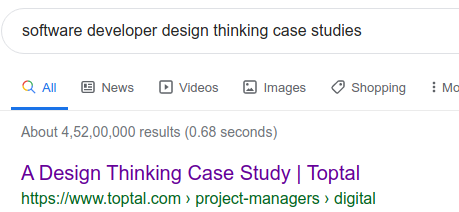
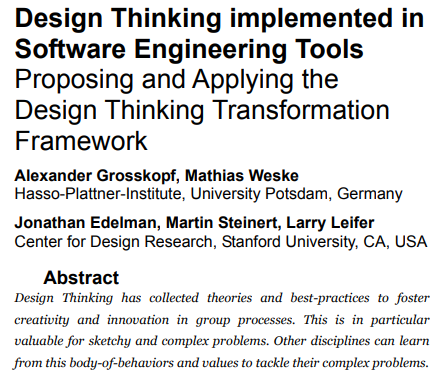
②
Learn even more by doing more projects using the learning from this design thinking course
Suggested References
- Karmic Design Thinking by Dr. Bala Ramadurai
- Design: Creation of Artifacts in Society by Prof. Karl Ulrich, U. Penn
- Change by Design by Tim Brown
- And Suddenly the Inventor Appeared, by G. Altshuller
- IDEO
- Stanford d.school
- Wikipedia.org - Four Noble Truths
③
Suggested Videos
Watch this - Empathize
Watch this - Analyze
Suggested Videos
Watch this - Solve
Watch this - Test
①②③
- Search
- Learn
- Watch
Acknowledgments
- Emacs - this old editor rocks! - https://www.gnu.org/software/emacs/
- Spacemacs - this new configuration is space age - https://spacemacs.org
- Org Mode - I run my life using this - https://orgmode.org
- Reveal.js - cool presentation script - https://revealjs.com/
- Org-reveal package - lets me live in org-mode - https://gitlab.com/oer/org-re-reveal
- Org-teaching - original codebase for this presentation - https://gitlab.com/olberger/org-teaching
- Plantuml - for all the cartoon work - https://plantuml.com/
- Hugo - for converting into static html - https://gohugo.io
- Gitlab - for hosting my website and the presentations - https://gitlab.com
Acknowledgments
- Conversations with
- Dr. Dmitry Kucharavy, Professor, France
- Dr. Murali Loganathan, co-Founder, Head, Sales & Research, Spirelia Innovation
Meet Your Facilitator - Prof. Bala Ramadurai

Oh and one more thing
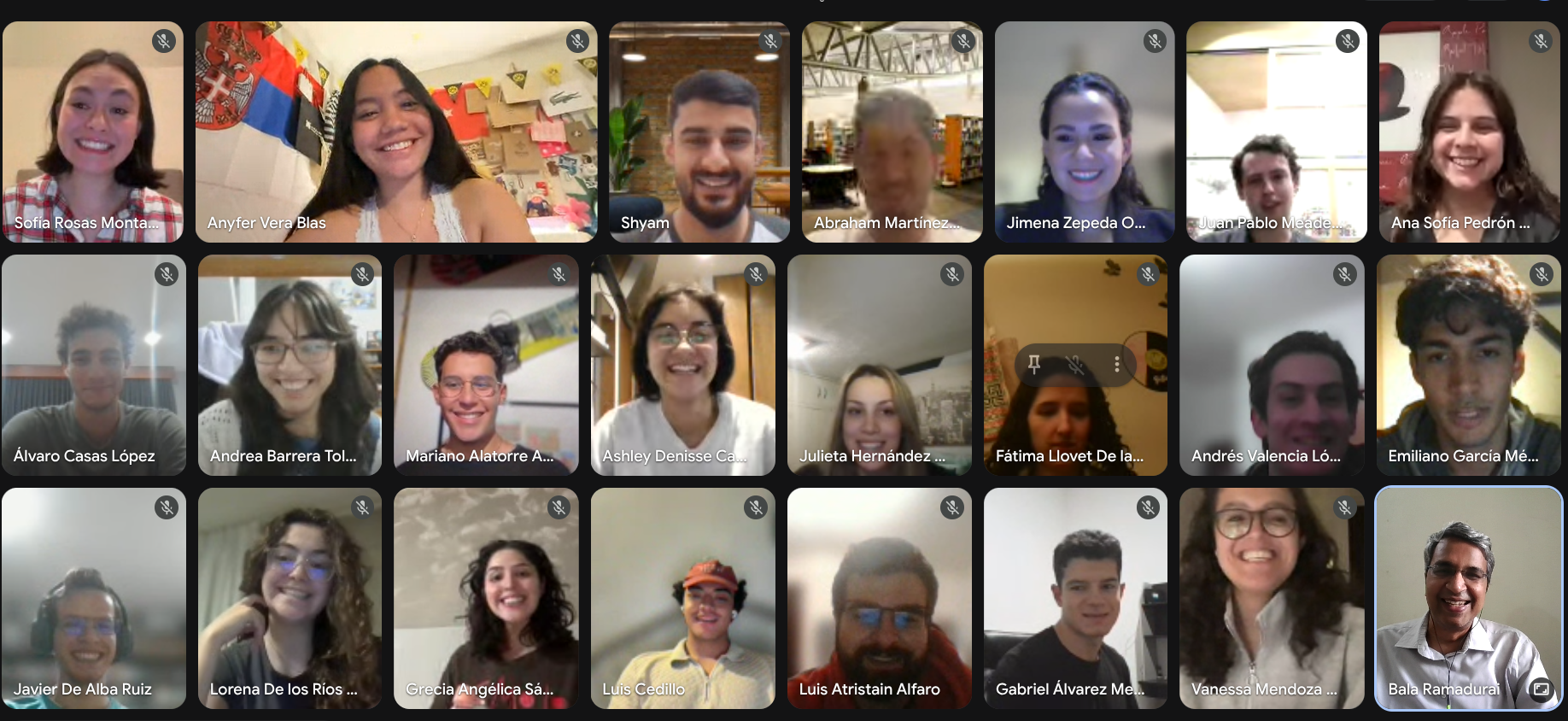
Selfie

2026-Summer-UP
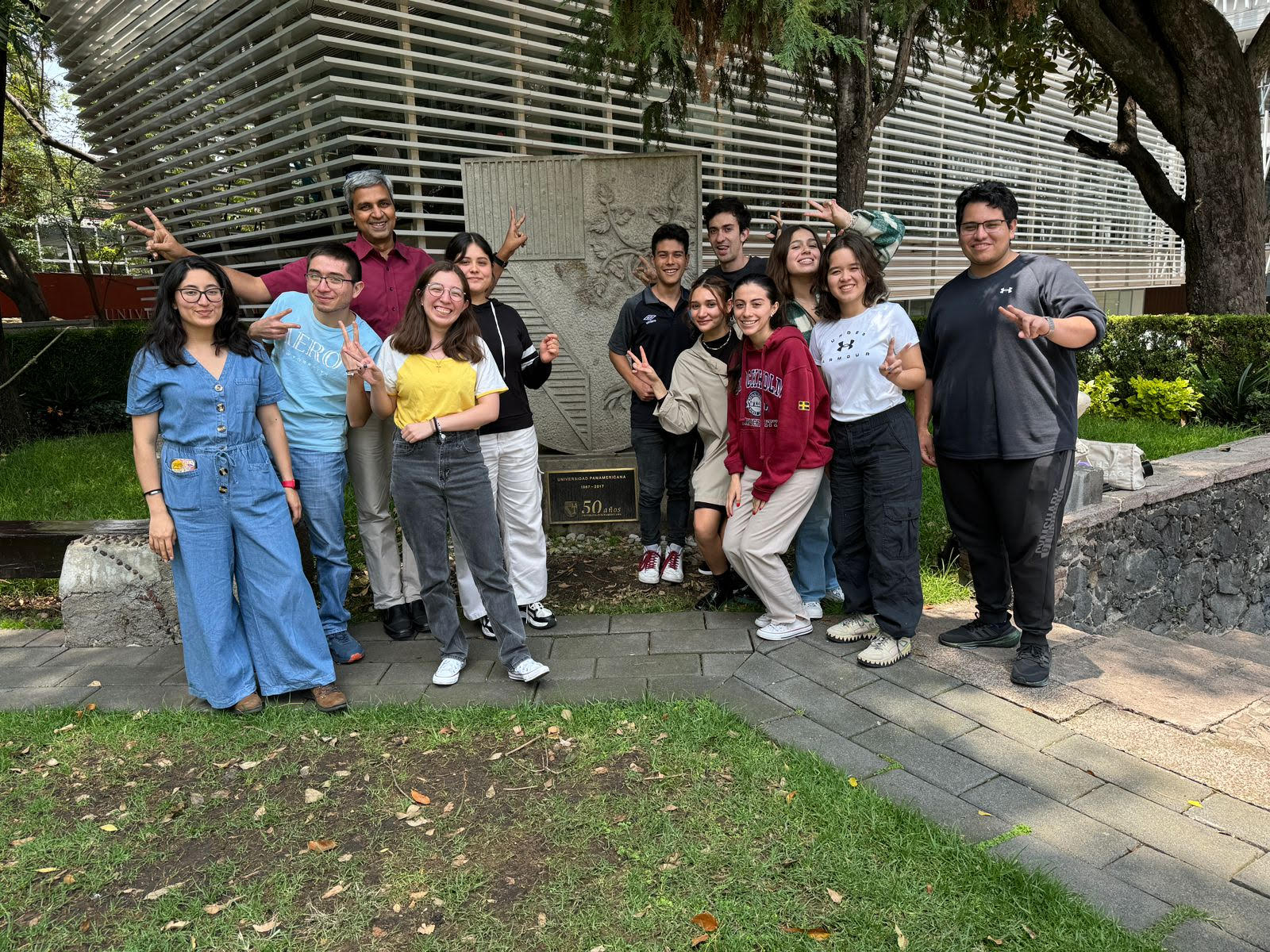
2024-UP Karmic Design Thinking
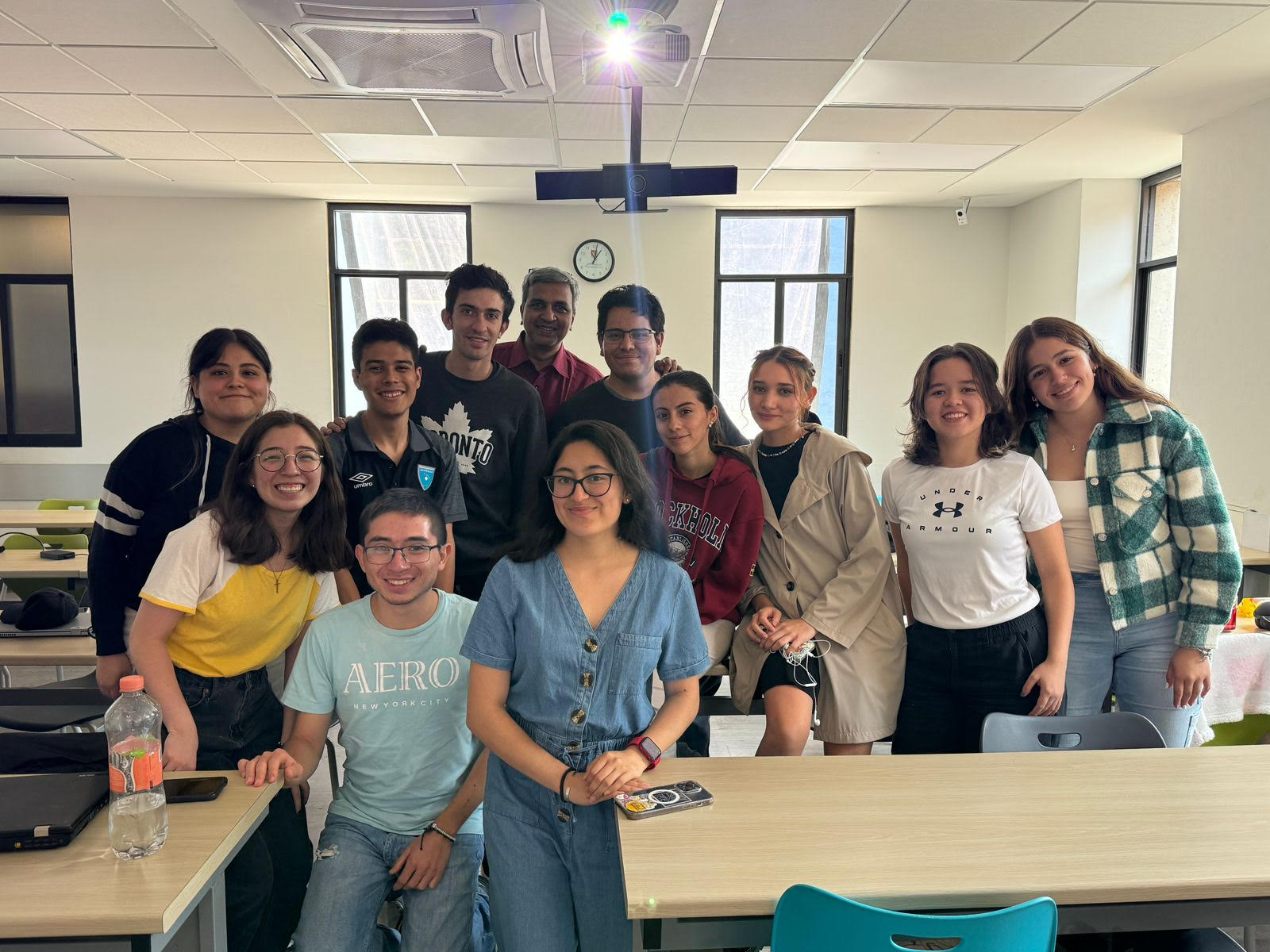
2024-UP Karmic Design Thinking - In class
2025-UP Karmic Design Thinking
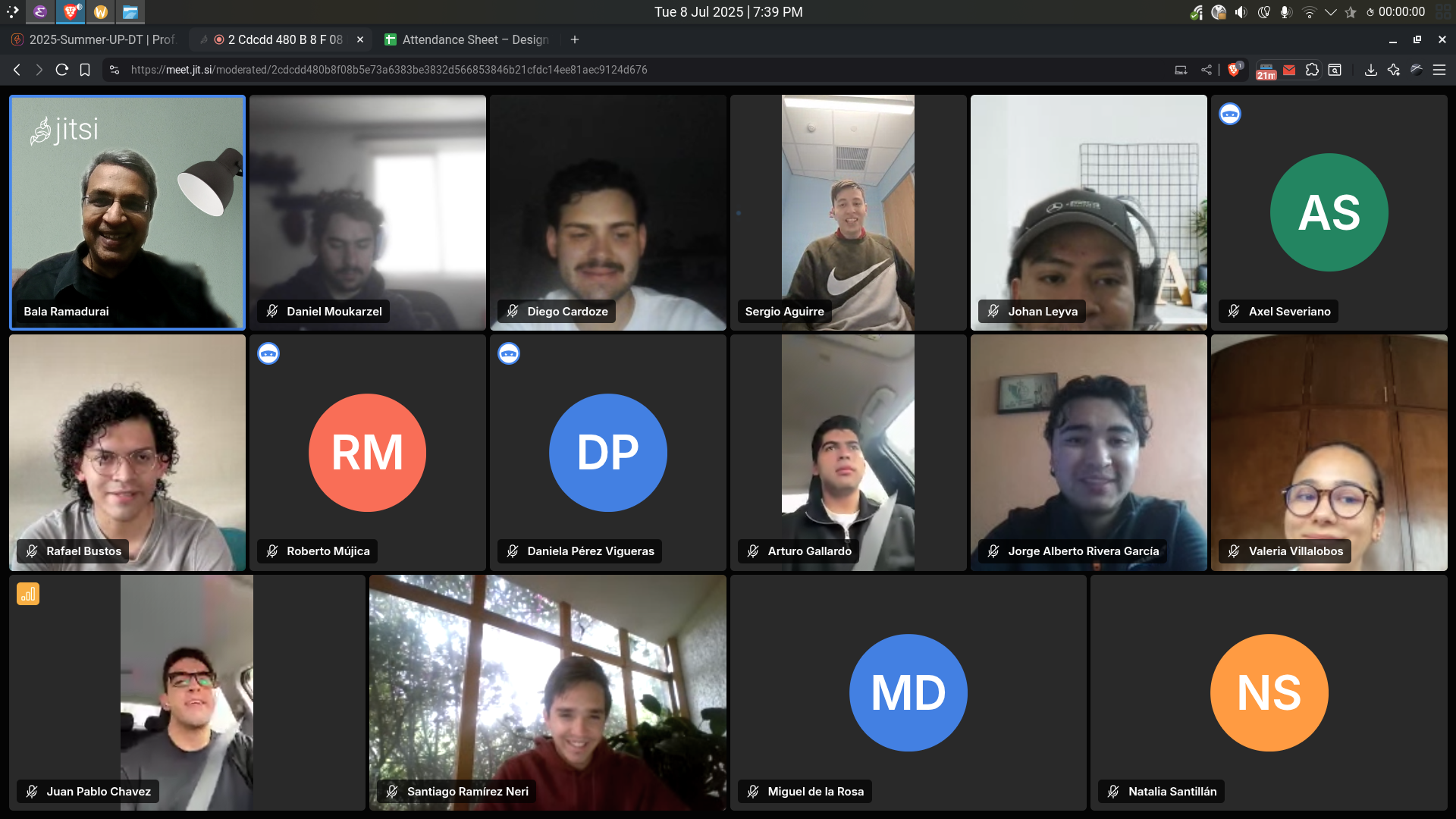
2026-UP Karmic Design Thinking