Red — your first points are live now (no learning yet!)
Open the portal and answer — from your own login, first 10 minutes only:
A 10-year-old plays games on her tablet for hours, snacks while she plays, and rarely goes outside.
In 3 lines: what does she actually NEED? (a need, not a solution)
Hard? Good — that's the point. We learn the tool, then you redo it. 😀
Intro & Plan
Meet Your Facilitator - Bala Ramadurai
Entrepreneur, Professor, Author and Innovation Coach

- Marie Curie Research Fellow at Politecnico di Milano, Milan, Italy
- PhD from Arizona State University, USA (Materials)
- BTech from IIT Madras, India (Metallurgy)
Prof. Bala Ramadurai - Professor
- IIT Madras, Chennai, India
- Universidad Panamericana, Mexico City, Mexico
- Symbiosis Institute of Business Management, Pune, India
Bala Ramadurai - Author
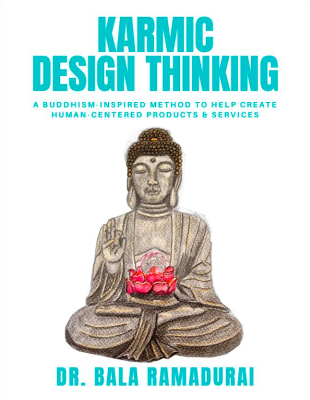 |
 |
 |
 |
Bala Ramadurai - Innovation Coach

Bala Ramadurai - Entrepreneur

Spirelia
Innovate with Confidence
Srishti OS — The AI-Native Innovation Platform
Spirelia Innovation Pvt. Ltd.
"Innovate with Confidence, Powered by Insight"
& Roadmapping
Assistant
& Idea Generation
Protection
Prototyping
Courses Taught
Design Thinking
Human Centred Design of products and services
Innovate Like a Boss
Systematic Innovation using methodologies like TRIZ, Brainstorming
Technology Forecasting

Love to keep in touch
https://balaramadurai.net/about/
bala@balaramadurai.net
My LinkedIn

Your Intros
Short Intro of Yourself
- First Name
- What is your specialization or subject of your studies?
- What do you aspire to do in life?
- What is your favourite vegetable?
The Karmic Journey — 4 Fridays
| Day | Date | Phase |
|---|---|---|
| 1 | Fri Jul 17 | Empathize |
| 2 | Fri Jul 24 | Analyze + Solve |
| 3 | Fri Jul 31 | Test + Presentation Skills |
| 4 | Fri Aug 7 | EAST Iteration 2 + Finale |
Between each Friday: field work — your customers, your prototype, your portfolio.
How this course is different this year
- You run your own project. Every one of you. Your grade is yours alone.
- You belong to a House (one of 10 dishas) — for teamwork games, peer review and the leaderboard, not for the project.
- Most grading is done by AI + your peers, so I can give 94 of you a meaningful, individual experience.
- Show up, do the field work, prototype, talk to customers — the points follow.
How every Friday flows — Red → Green → Refactor
- Red — first 10 minutes: try the challenge before you're taught. You'll likely miss — good.
- Green — the session: learn the phase and produce the real thing.
- Refactor — the close: redo the opening and watch how far you moved.
Builders will recognise this — it's TDD/BDD (test-first), the way real teams ship.
Our shared language — Given / When / Then
A behaviour, written so anyone can test it:
- Given a situation, When something happens, Then this is the outcome
You already know its cousins: the CJM's Before/During/After and Analyze's If/Then/But.
You'll write your customer's pain this way, turn it into a test, then build to pass it.
What you will do
- Perform field work with real customers
- Build a working prototype
- Maintain your individual KDT portfolio (one upload per phase)
- Review your Housemates' work (and learn from theirs)
- Iterate — EAST, EAST, EAST
- As far as possible, no "homework" beyond the project itself
The Scoreboard — out of 100
| Bucket | Marks |
|---|---|
| Project Portfolio (5 phases) | 60 |
| Live Engagement | 30 |
| Peer-review contribution | 10 |
Absolute grading. No curve. No fighting your classmates for marks.
Portfolio — 60 (12 per phase)
- Empathize · Analyze · Solve · Test · Iterate — 12 each
- One individual upload per phase to the shared drive
- Named:
House-FirstName-LastName-Phase(e.g.Purva-Bala-Ramadurai-Empathize) - Graded by an AI evaluator on a published checklist; I moderate
Live Engagement — 30
- Live outputs (22) — points come from what you produce in the room, from your login: ideas, HMW, House-vote, Q&A, micro-quiz — spread across the day
- Customer depth (8) — talk to more than the minimum, show the evidence
No attendance scan. Being here is necessary; producing is what scores.
Earn badges: Empathy Ace · Conflict Cartographer · Prototype Pro · Pivot Master · Streak Keeper · Top Reviewer
How your points work
- Points = individual output, logged to your account, at several moments each Friday
- The day's first output is in the opening 10 min — late = miss it (Streak Keeper = catch all 4 openings)
- At one random moment I'll call names live — answer in person
- So: do your own work in the room and the points are automatic
- A friend's phone in your bag produces nothing — there's no scan to steal 😀
If you are absent
- Submit that phase's portfolio online → you still get full portfolio marks
- You only forfeit that day's Live Engagement points and the chance to present
- Inform the course coordinator (and copy me)
AI usage policy
- Please use AI tools as necessary
- Please remember that AI can make mistakes
- Please check with me, if you have any doubts or questions
- Please remember that AI, sometimes, behaves like a junior colleague
- Please don't pass off results from AI as your own
- Please cite results from AI, if you have used AI
Two Scenarios
Tiger or Rocky?
Which approach would you adopt for your idea?
90%
Tiger
Design Thinking is Human Centred Design
How do organizations innovate?
Ideas implemented should lead to sales/revenue from the customer
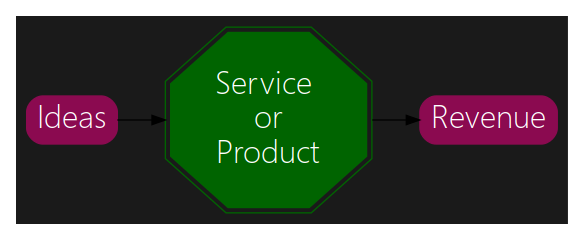
Ideas are meant to solve problems
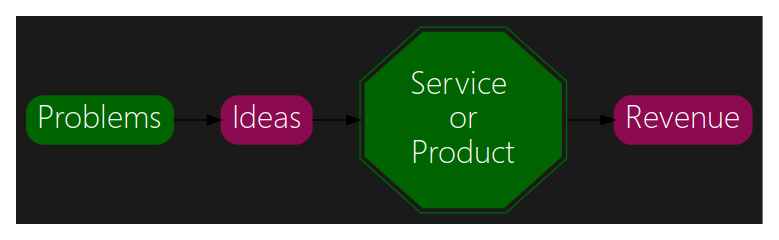
Whose problems?
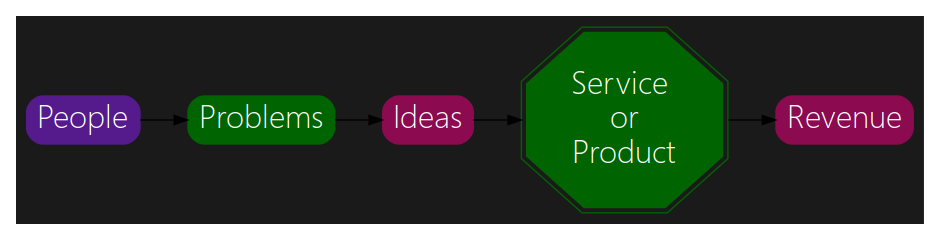
Not many will like untested products
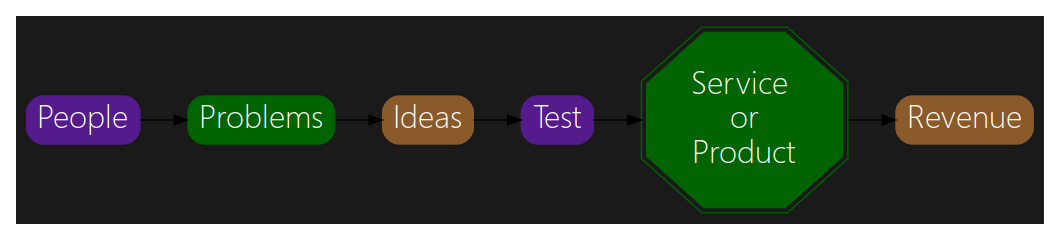
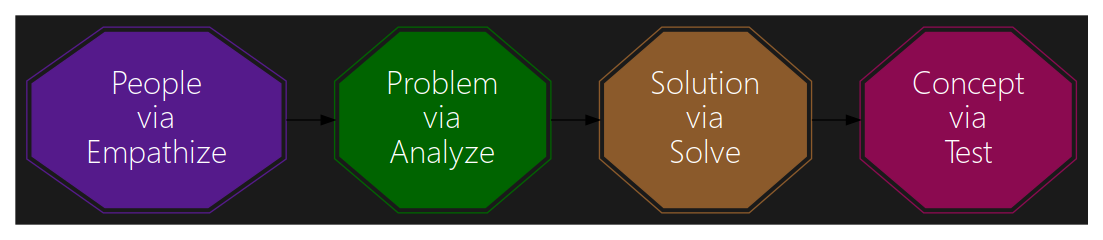
A Four Step Efficient and Systematic Process called Design Thinking
Four Noble Truths
- Dukkha — Acknowledge that there is suffering
- Samudaya — Delve into the cause of suffering
- Nirodha — Think of ways to end the suffering
- Marga — Walk on the path to end the suffering
4 Phases of Design Thinking
- Dukkha
- Samudaya
- Nirodha
- Marga
- Empathize
- Analyze
- Solve
- Test
- "Don't take my word, apply this for yourself"
- "cycles"
What are "cycles" in an organization?
Go EAST for Design Thinking

Patient-Centric Design Thinking
Watch this - https://youtube.com/watch?v=FkJD9bYS-As
Shared Drive

Your House (one of 10 dishas)
- East (Purva)
- West (Pashchima)
- North (Uttara)
- South (Dakshina)
- Northeast (Ishanya)
- Northwest (Vayavya)
- Southeast (Agneya)
- Southwest (Nairitya)
- Zenith (Urdhva)
- Nadir (Adhova)
What a House is (and isn't)
- ~9–10 of you per House (you're assigned one)
- A House is your base camp: peer review, in-class challenges, the leaderboard
- A House is NOT a project team — your project and your grade are your own
- Want to swap House? Email me, copy the swapping member
Your project for the course
- Pick a product/service you will improve — your project, start to finish
- You will submit your own portfolio at each phase
- Tips:
- Pick something you feel the drive to improve
- Pick a problem with more than one possible solution
- You will need to make a working prototype by Day 2
- Make sure there's more than a market of one who benefits
Task 0: Frame your project
- Write a How Might We (HMW) statement naming the existing product/service
- E.g. — How might we enhance security for a lone woman in a taxi at night? (Uber)
- E.g. — How might we be more compassionate to the elderly while delivering groceries? (Blinkit)
- One slide with the HMW; target customers must be clear
- Upload to the drive:
House-FirstName-LastName-Task0
Time for Task 0:
Empathize
Watch this - https://youtube.com/watch?v=9_1Rt1R4xbM
Empathize is visual story telling
Customer Journey Mapping (CJM) is the tool we'll use to tell the story
Kid Mobile Case Study

The kid's persona
Name: Akanksha
Gender: Female
Location: Pune, India
Age: 10
Description: Lives in Pune with her elder brother and parents. Loves chocolates, aspires to be a badminton player, hates assignments and exams. Owns a tablet, would like a pet.
Customer Journey Map — Before
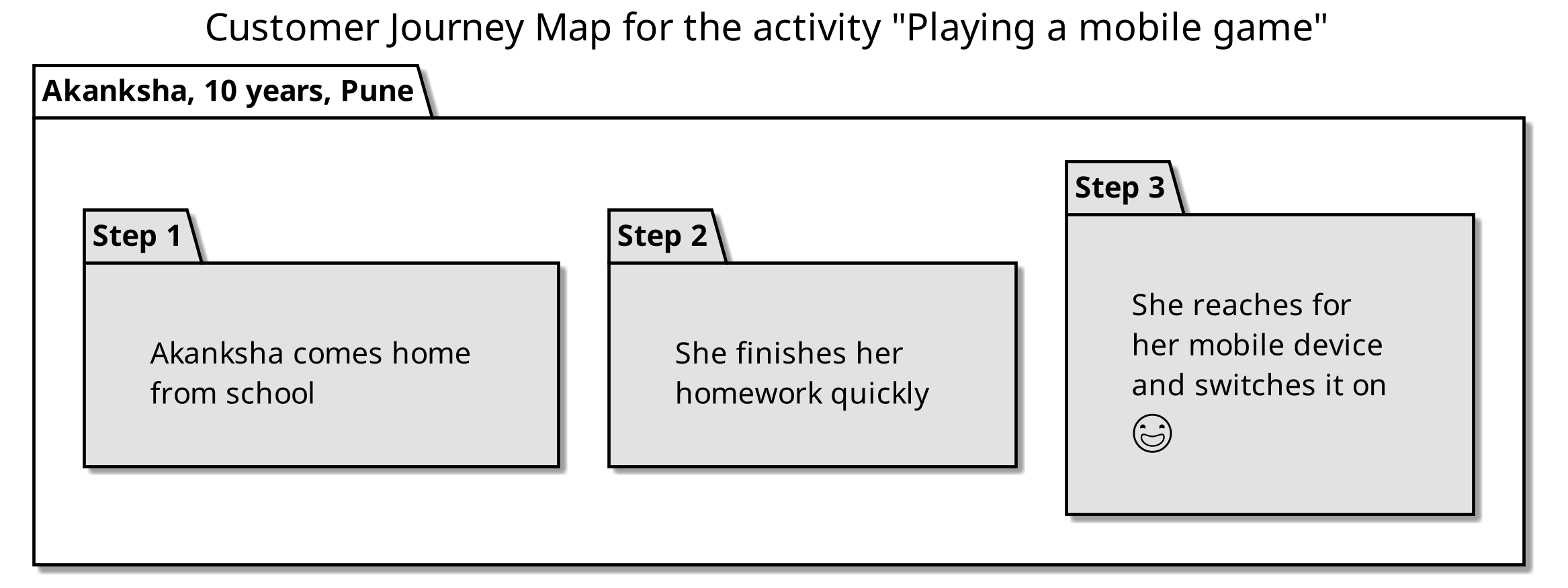
CJM — During
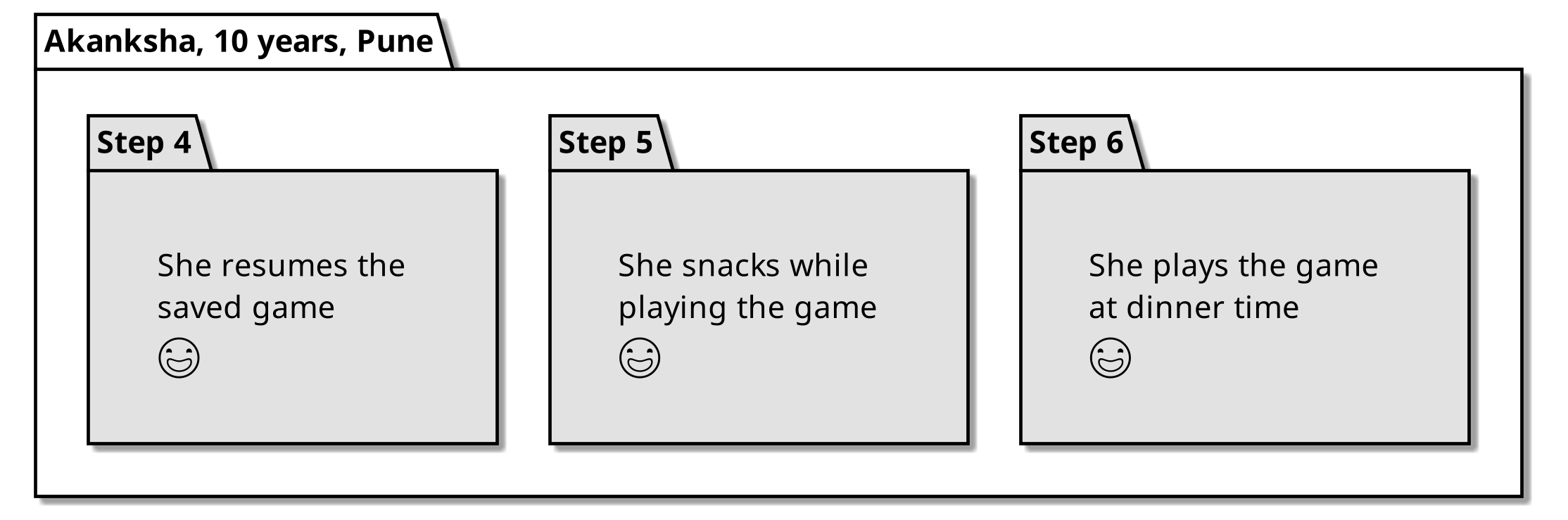
CJM — After
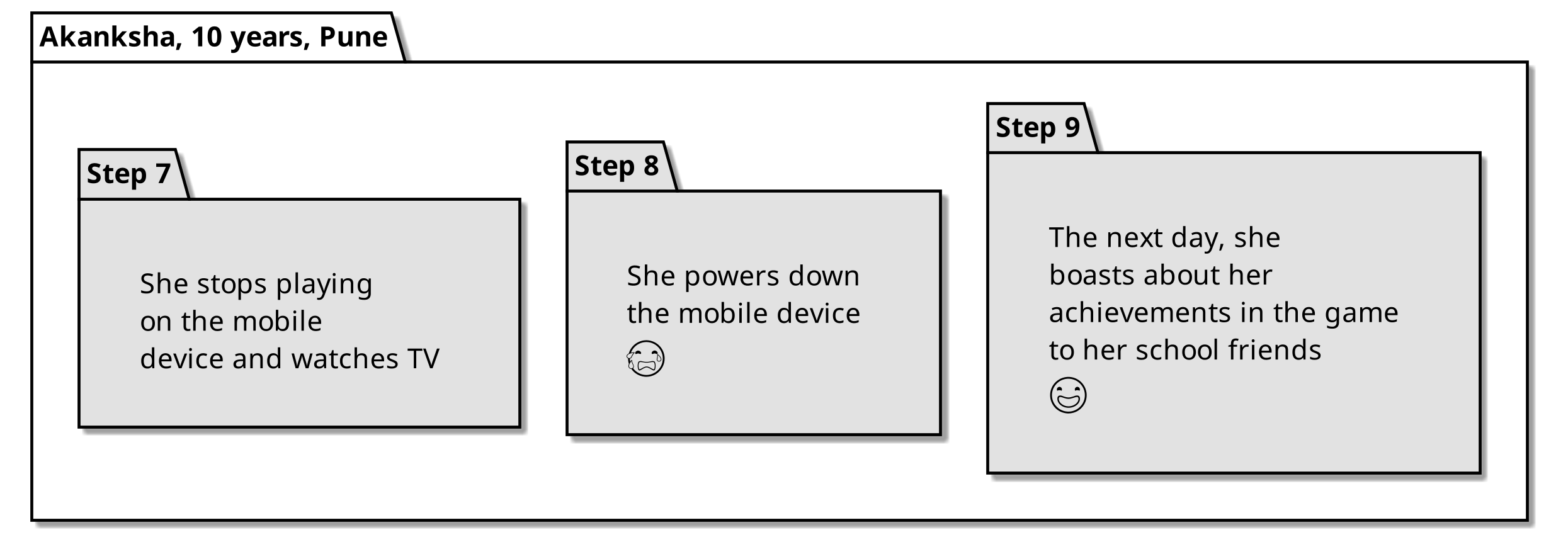
List of problem statements
- The kid plays on the mobile for most of her spare time
- She snacks/eats while playing on the mobile
- She spends very little time playing outdoors
Customer Journey Mapping
- Write the customer's activity
- Write the major steps of the user experience
- Split the story into 3 — Before, During and After
- Mark the emotional highs and lows (😄 and 😞)
Say the pain as a test — Given / When / Then
The CJM in one testable line — current behaviour, no solutions:
- Given Akanksha has free time and a tablet,
- When she reaches for something to do,
- Then she plays indoors for hours and skips going out 😞
This is your Red — the pain you'll later prove you fixed. Still no solutions here.
Customer interactions
Interaction tips
- Appraise the customer of your intentions and the case
- Give more information than you receive, initially
- Ask them to use the product/service and observe
- Be curious about how they use it
- Ask for stories of their best and worst experiences
- Give them time to be comfortable
- Talk to 3 n customers (this is a minimum, not a maximum)
Since you run solo, n = 1 → minimum 3 customers. More customers = Empathy Ace badge + Customer-depth XP.
Customer Interaction Tips Video
Watch this - https://youtube.com/watch?v=KZYntTU3JW4
Task 1A: Empathize This
- Field work
- Interact with at least 3 customers (more is better)
- Field work
- Anyone not associated with SIBM
- CJM
- Create personas (name, gender, age, location, occupation, family)
- CJM
- Write the customer activity
- CJM
- Before / During / After, with emotions and photos of the customer
- Problems
- List the problem statements — no solutions, please
Task 1B: Empathize That
- A short video (2–5 min) — a skit highlighting the customer's current status
- Use human actors (no AI/avatars/cartoons)
- Minimize dialog; use your CJM as the script
- Upload the video to the drive
Refactor — redo your opening Need
Reopen the portal. Re-answer this morning's question — now that you have a CJM.
- Did your first try leap to a solution?
- Is your need sharper now — tied to a real emotion in the journey?
The gap between your Red and your Refactor is your learning today. 🎯
Checklist for Empathize
[ ]Customers — at least 3[ ]CJM — persona(s) with name, gender, age, location[ ]CJM — main activity of the customer[ ]CJM — 3 sections: Before, During, After[ ]CJM — emotions (smileys/sadeys present)[ ]Problems — listed[ ]Problems — NOT solutions[ ]Uploaded: presentation + video
How the room works each phase
- Build/field debrief at your House table
- Peer-review round — review 2–3 Housemates on the checklist (earns your peer-review marks)
- Roulette showcase — the wheel picks Houses; each sends its peer-voted champion to present
- Everyone uploads their own portfolio; the AI grades all of them
Empathize Roulette
Showcase format
- 6 minutes present + 4 minutes Q&A
- Audience questions earn participation XP
Criteria (portfolio, /12)
- Checklist completeness (50%)
- Video (15%)
- Subjective quality (20%)
- Customer evidence (15%)
Analyze
Red — frame a conflict before we teach you how
First 10 minutes, from your own login:
Take one problem from your CJM and write the tension two ways:
- If … Then … But …
- Given … When … Then …
Rough is fine — we'll sharpen it with TRIZ today, then you'll redo it.
Analyze — Conflict of Interest
Take one item from your list of problems
What would you like to improve in the system?
What stops you from achieving this improvement?
What you just framed is a…
Conflict
The Matrix
The conflicts
- If
- Morpheus reveals code,
- then
- agents hack into Zion's mainframe,
- but
- Zion is more important than Morpheus
- If
- tank pulls the plug,
- then
- Zion's codes will not be revealed,
- but
- Morpheus will die
Conflict or Contradiction Model
- If
- <Thing happens or Action taken>
- Then
- <Positive Consequence>
- But
- <Negative Consequence>
Same shape as Given / When / Then
- If a thing happens ≈ Given/When a situation occurs
- Then a good consequence ≈ Then the outcome you want
- But a bad consequence = the tension your solution must resolve
Your HMW is just the Then you're aiming for — your future acceptance test.
Put on your movie critic's hat
- Think of a movie or novel you really liked
- Pick a scene you liked
- Find the conflict the character faced
- Represent it in the model (If… Then… But…)
Time left:
Conflict of Interest — Kids Mobile Case Study
- If
- kids are given access to too many apps
- then
- they have more freedom to discover new apps
- but
- there's no parental control over the type of apps
So the problem becomes — How might we give more freedom to kids while retaining parental control?
Task 2: Analyze
- Take the problems from Empathize
- For each, ask "What would you like to improve?"
- Ask "What stops you from achieving this improvement?"
- Frame each as a conflict (If… Then… But…)
- Write each desired result as a How Might We question
Analyze — Checklist
[ ]Conflicts defined for each problem (If/Then/But)[ ]Positive and negative consequences stated[ ]Desired results as How-Might-We questions[ ]All problems from Empathize covered
Solve
Silent Brainstorming
- Write down all ideas for your HMW questions in a shared document
- You can look at others' ideas
- Keep track of the number of individual ideas
- Set a target number and beat it
Time left:
Теория Решения Изобретательских Задач
*
:REVEALBACKGROUND: ../Pictures/People/Historical/Altshuller.png
TRIZ
TRIZ Philosophy
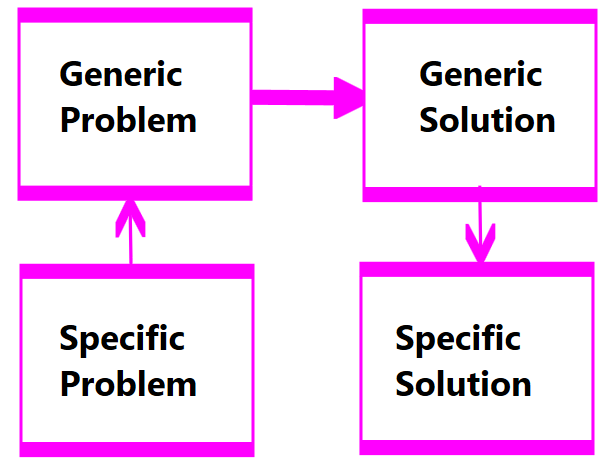
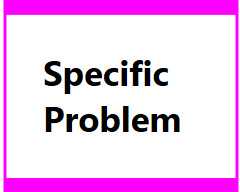
Step 1: Draft your conflict in specific terms
Step 2: Define the conflict generically
Tip — the mapping of parameters needn't be exact
Step 3: Find generic solutions from the Matrix

Step 4: Generate the specific solution for your problem

Case Study: Ideas
- Separate login for parents
- Physical app store with parents holding the keys
- Parents hold the main objective of the game
- Game save cannot happen without parental permission
Write the test first
Before you build anything next week, write 2–3 acceptance tests your prototype must pass:
- Given a parent sets up the tablet, When the kid opens a new app, Then it needs a parent OK
Plain language, customer's point of view. If you can't test it, it isn't done.
This is your Red. Next week you build only enough to turn these Green.
Task — Solve
- Pick the desired results (from Analyze)
- Use the 4-stage TRIZ philosophy to generate ideas (an LLM may help)
- Use https://www.triz40.com/TRIZ_GB.php
- Combine all ideas from silent brainstorming and TRIZ into one concept
- Write 2–3 acceptance tests (Given/When/Then) your prototype must pass — before building
Solve — Checklist
[ ]Ideas from silent brainstorming (8+ good, 12+ excellent)[ ]Ideas from TRIZ methodology[ ]Consolidated concept[ ]2–3 acceptance tests (Given/When/Then) written before prototyping
Criteria for evaluation — Solve (/12)
- Silent brainstorming volume (15%)
- TRIZ genuinely applied (20%)
- Novelty of the idea (20%)
- Prototypability (15%)
- Acceptance tests (Given/When/Then) before prototype (15%)
- Consolidated concept (15%)
Refactor — your tests are your spec
From your own login: post your 2–3 acceptance tests (Given/When/Then).
Next Friday you arrive with a prototype built to pass them — and we find out if it does. 🔴→🟢
Test
Red — will your prototype pass?
First 10 minutes, from your own login:
You wrote acceptance tests last week. Predict: how many pass when a real customer uses it?
Write the number and your shakiest test. Today we find out for real.
Stepping stones
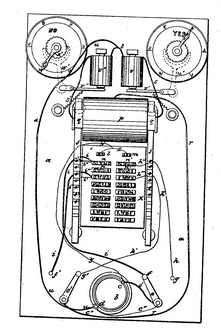
FAILURE
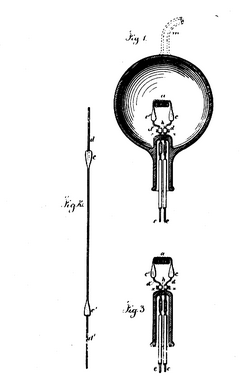
ROARING SUCCESS
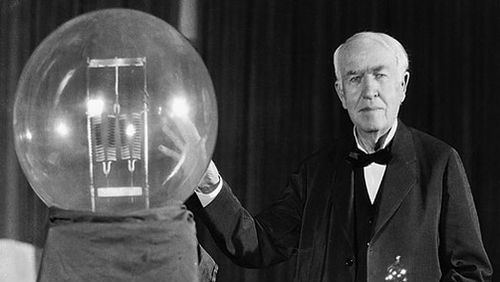
Prototypes
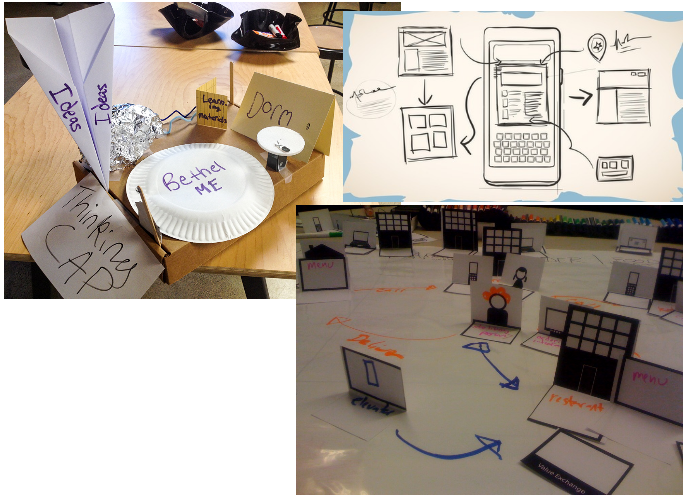
In this step
- Take your prototype to the user and observe how they react
- Photograph/videograph their reactions (with permission)
- List the problems the customer faces with this new prototype (Test.v1 / Empathize.v2)
- Run each acceptance test on a real customer — mark it PASS or FAIL
Task 4A: Test This
- Consider the solutions you generated in Solve
- Make a working prototype with odds and ends
- Make a copy of your existing CJM
- Modify the CJM to include your solution
- Run your acceptance tests with a real customer; record PASS/FAIL + evidence
Task 4B: Test That — Ad
- Take an advertisement you liked as inspiration
- Make a digital ad (video) selling this product/service to your customer
- Use human actors (no stock footage / AI avatars)
- Use the AIDA principle (max 2 min)
Test — Checklist
[ ]Prototype and demo[ ]Modified CJM- Your CJM CANNOT be all 😀😀
- There must be some new 😳😫
[ ]Assumptions listed[ ]User-testing evidence (real customers used it)[ ]Each acceptance test marked PASS/FAIL, with evidence
Test — Criteria (/12)
- Prototype readiness (30%)
- Features list (10%)
- Modified CJM with NEW pain (10%)
- Assumptions (10%)
- Acceptance tests run on customers, PASS/FAIL logged (25%)
- Video/demo (15%)
Refactor — green or red?
From your own login: which tests went green, which stayed red?
A red test isn't failure — it's your to-do list for Iteration 2. 🔴→🟢
Presentation Skills Workshop
A guest workshop on presenting with impact
Criteria for evaluation
- Clarity of delivery (20%)
- Overall structure (20%)
- Engagement with the audience (20%)
- Time (20%)
- Quality of presentation aids (20%)
EAST — Iteration 2
Red — make the failing test pass
First 10 minutes, from your own login:
Which acceptance test failed hardest in V1?
Write the Given/When/Then your V2 must now pass — that's today's mission.
In this step
- Take your prototype to your customers again and observe them using it
- List the new problems (Empathize.v2)
- Find the conflicts in these problems (Analyze.v2)
- Generate ideas to solve them (Solve.v2)
- Improve the prototype (Test.v2)
- Refactor: make last week's failing tests pass — and write fresh ones for the new pain
- Update your portfolio and showcase
Path forward
- Wash, Rinse, Repeat
- EAST, EAST, EAST
- Iterate as many times as you can
Red → Green, every cycle
Each EAST loop = turn a red test green, then write the next red.
That's design thinking and the way good software ships. Carry it past this course. 🚀
Iterate — Checklist (/12)
[ ]Evidence of a V2+ cycle through EAST[ ]Real customer feedback incorporated[ ]CJM evolved across iterations[ ]A previously failing acceptance test now passes (red → green)[ ]Improvements documented (what changed and why)
Finale Roulette
Final leaderboard + badges
- House leaderboard winner
- Individual badge roll-call
- Best Pivot, Empathy Ace, Prototype Pro
Conclusion
Now What?
Search for case studies in your own domain
Learn even more by doing more projects using what you learned here
Suggested References
- Karmic Design Thinking by Dr. Bala Ramadurai
- Design: Creation of Artifacts in Society — Karl Ulrich
- Change by Design — Tim Brown
- And Suddenly the Inventor Appeared — G. Altshuller
- IDEO
- Stanford d.school
Meet Your Facilitator — Prof. Bala Ramadurai

Selfie
Karmic Design Thinking — SIBM 2026
Smile! 📸