Innovate Like a Boss
A short course on how to transform ideas into revenue streams
Bala Ramadurai
Intro & Plan
Meet Your Facilitator - Bala Ramadurai
Entrepreneur, Professor, Author and Innovation Coach
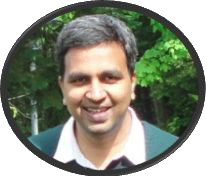
- Marie Curie Research Fellow at Politecnico di Milano, Milan, Italy
- PhD from Arizona State University, USA (Materials)
- BTech from IIT Madras, India (Metallurgy)
Prof. Bala Ramadurai - Professor
- IIT Madras, Chennai, India
- Universidad Panamericana, Mexico City, Mexico
- Symbiosis Institute of Business Management, Pune, India
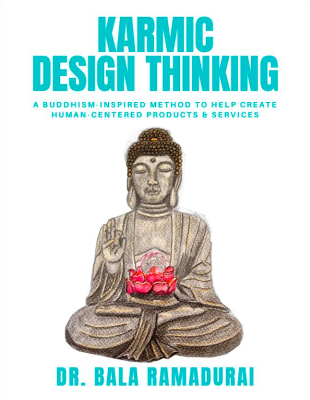
Bala Ramadurai - Author
 |
 |
 |
 |
Bala Ramadurai - Innovation Coach

Bala Ramadurai - Entrepreneur

Spirelia
Innovate with Confidence

| AI Agent | Function | Core Benefit |
|---|---|---|
| Uttishta AI | What to Invent | Strategic IP & market intelligence |
| Utkarsha AI | Where to Invest | Future forecaster of technologies and strategic investment analysis. |
| Karmaja AI | How to Innovate | Guided, structured workflow for solution generation. |
| Narasimha AI | How to Protect | Efficient capture of invention details. |
Courses Taught
Design Thinking
Human Centred Design of products and services
Innovate Like a Boss
Systematic Innovation using methodologies like TRIZ, Brainstorming
Technology Forecasting

Love to keep in touch
https://balaramadurai.net/about/
bala@balaramadurai.net
My LinkedIn

Intros
Intro
- What is your specialization?
- What org do you work for?
- What is your superpower?
Context
Ideas implemented should lead to sales/revenue from the customer
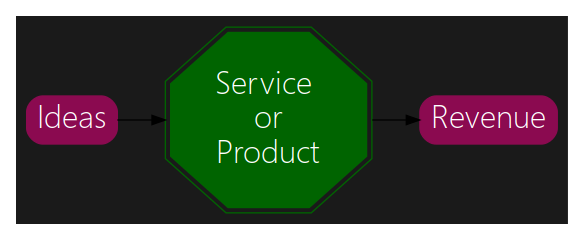
Ideas are meant to solve problems
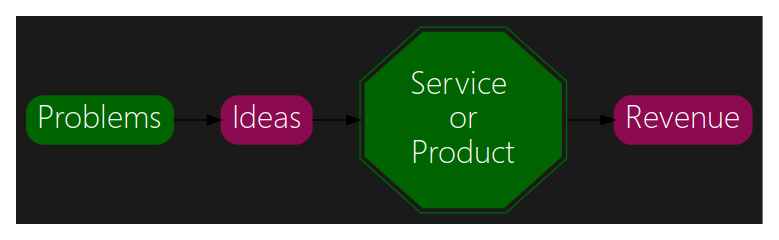
Whose problems?
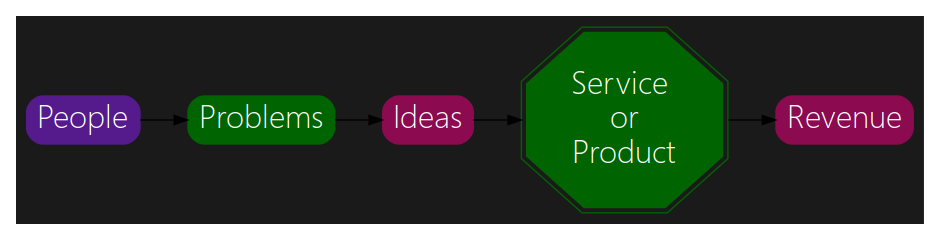
Not many will like untested products
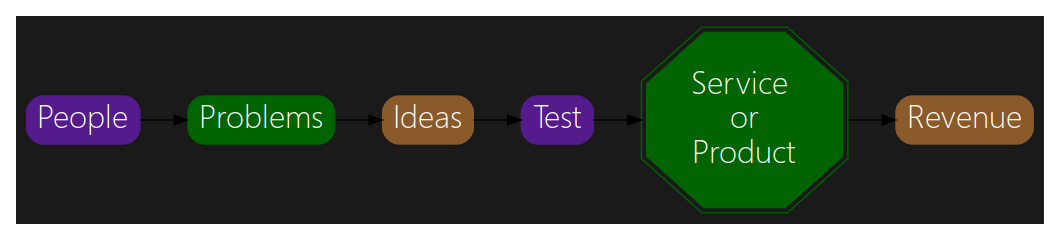
The Innovate like a Boss (ILAB) Journey
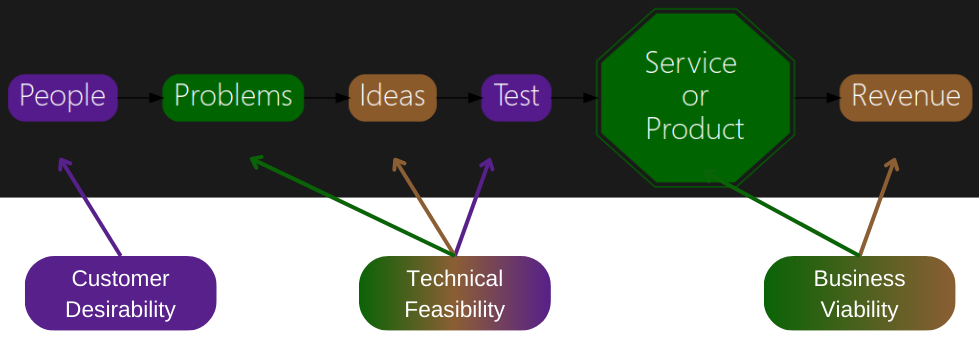
ILAB Journey - Part 1
| Session | Topic |
|---|---|
| Session 1 | What is Innovation: |
| Context, Pillars - CD, TF, BV | |
| Session 2 | TF: Technical Feasibility - Short Term |
| Problems - Function Analysis | |
| Session 3 | TF: Technical Feasibility - Short Term |
| Problems - Conflict of Interest |
ILAB Journey - Part 2
| Session | Topic |
|---|---|
| Session 4 | TF: Technical Feasibility |
| (Short-term) - Silent Brainstorming | |
| Session 5 | TF: Technical Feasibility |
| (Long-term) - Trends | |
| Conclusion |
Session 1: What is Innovation?
What the heck is Innovation?
Innovation
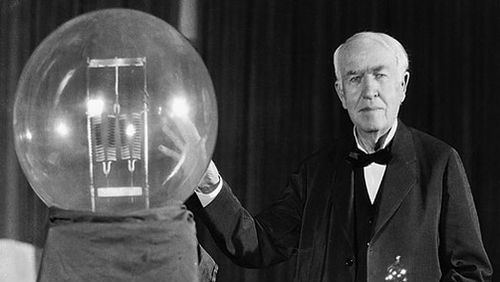
10s → 1200 hours


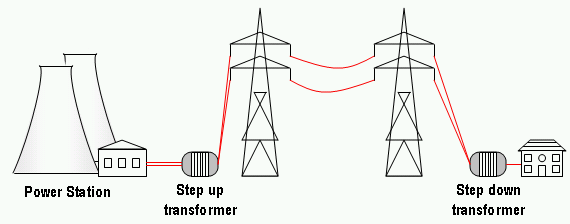
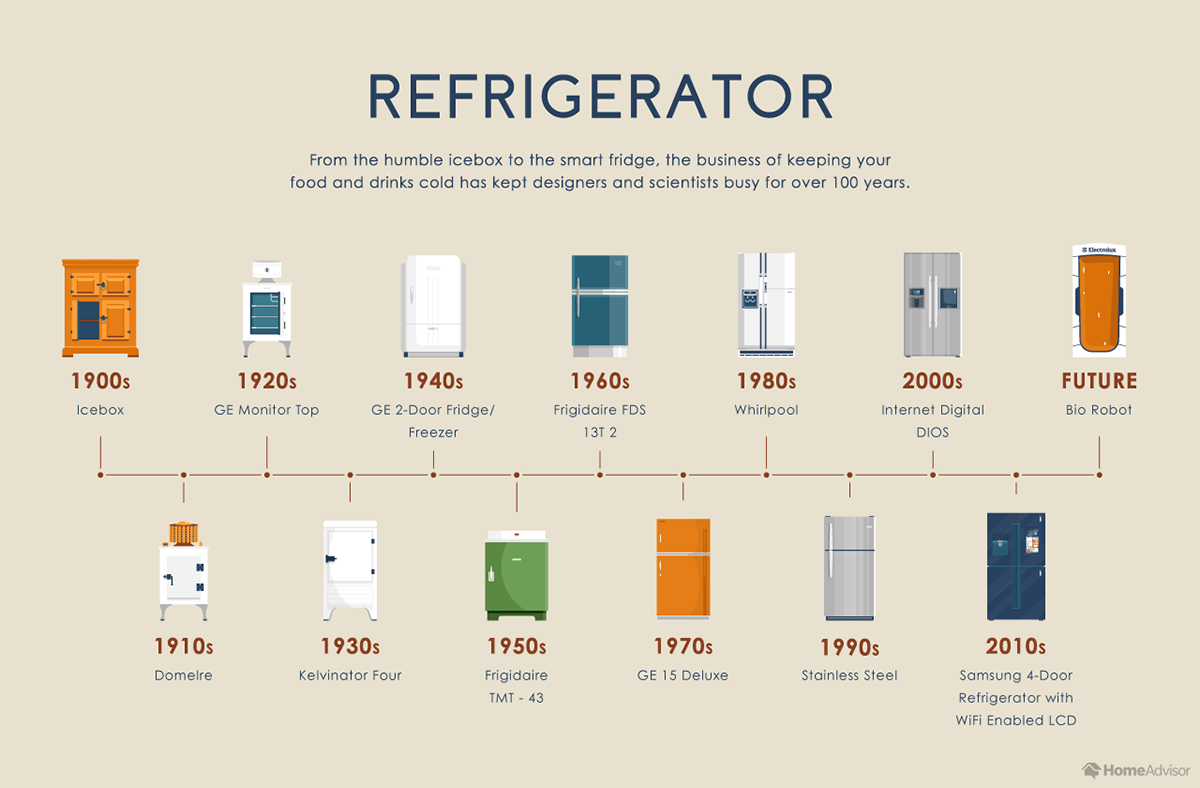
Moral of the story
- Think about the customer situation
- Formulate the problem according to the customer situation
- Think systems (not just ideas/products/services)
- Create systems which make business sense
Innovation
- Customer Desirability
- Technical Feasibility
- Business Viability
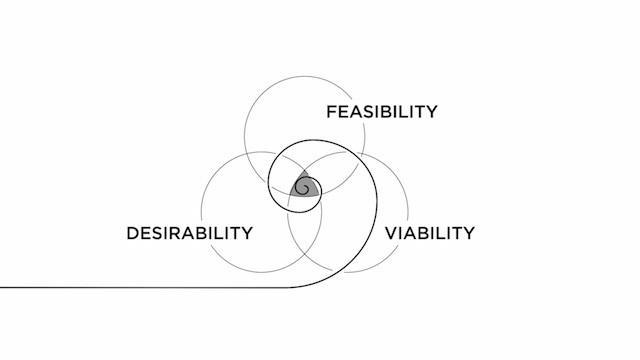
Source - Ideo's model - https://www.ideou.com/blogs/inspiration/how-to-prototype-a-new-business
Task: Your first task
- Your Shared Drive
- https://bit.ly/2026-AU-GROW-Innovation
- Your Work Folder
- Create your team folder inside Assignment Uploads
- Your Project
- Create a one-slider with 3 pictures and descriptions of what problem you would like to work on for this course
- Your reference
- PDF version of notes from every class will be available inside the folder Reference
Tips for picking a project
- Pick a project that you feel the drive to solve
- Pick a project that might have more than one solution
- See if it is something you have the skills to work on
- Think about if there are more than a market of one who will benefit if the problem were solved
AI usage policy
- Please use AI tools as necessary
- Please remember that AI can make mistakes
- Please check with me, if you have any doubts or questions
- Please remember that AI, sometimes, behaves like a junior colleague
- Please don't pass off results from AI as your own
- Please cite results from AI, if you have used AI
Session 2: Tech Feasibility - Short Term
Problems Identification - Function Analysis
Moral of the Edison story
- Think about the customer situation
- Formulate the problem according to the customer situation
- Think systems (not just ideas/products/services)
- Create systems which make business sense
How do we think systems?
Visually, of course
Imagine trying to convey our best idea(s) through words to stakeholders
Instruments that record, analyse, summarize, organize, debate and explain information which are illustrative, non-illustrative, hardbound, paperback, jacketed, non-jacketed with forward introduction, table of contents, index that are indented for the enlightenment, understanding, enrichment, enhancement and education of the human brain through sensory root of vision… sometimes touch
Source - https://www.quotes.net/mquote/107715
How many of you have seen back to back movies or episodes?
Can you recall what went on in that scene in that movie "3 Idiots"?
How many of you would like to sit in my lectures back to back?
Recall question - What is the title of the 3rd session?

Water Case study
The evaluation of rural water purification systems necessitates a comprehensive assessment of water quality parameters, contaminant profiles, and operational constraints. A multi-barrier approach is essential, encompassing pre-treatment, primary treatment, disinfection, and post-treatment processes. The selection of appropriate technologies, such as membrane filtration and UV disinfection, is contingent upon site-specific factors. Ensuring system sustainability necessitates robust maintenance, community engagement, and adaptive management strategies. Socio-economic factors, including affordability, accessibility, and community ownership, are critical for successful implementation. The development of sustainable financing mechanisms and capacity building for local stakeholders are essential for long-term viability.
We need a visual tool to capture and communicate the problem situation
Function Analysis
I speak to you
| I | Subject (Doer) |
| speak | Verb (Deed) |
| you | Object (Recipient of the Deed) |
Pen writes on paper
| Pen | Subject (Doer) |
| writes | Verb (Deed) |
| paper | Object (Recipient of the Deed) |
Visually

How do we describe a system visually?
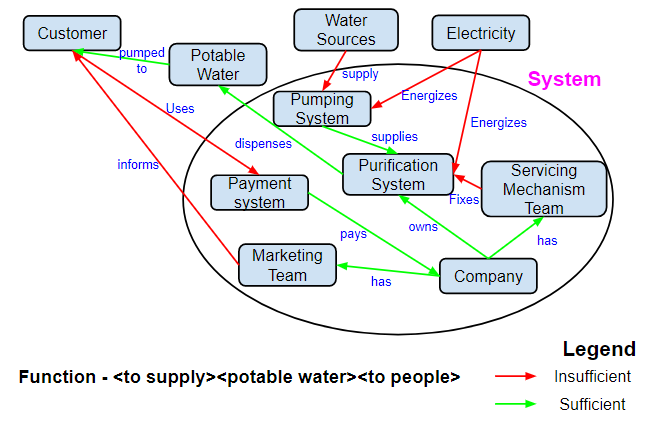
Step 1: List Objects of the System
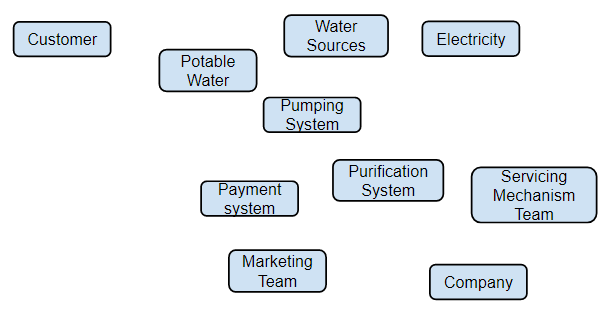
Step 2: Connect the Objects
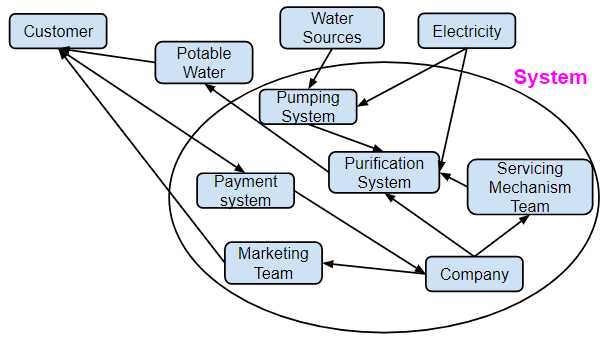
Step 3: Add verbs to the relationships
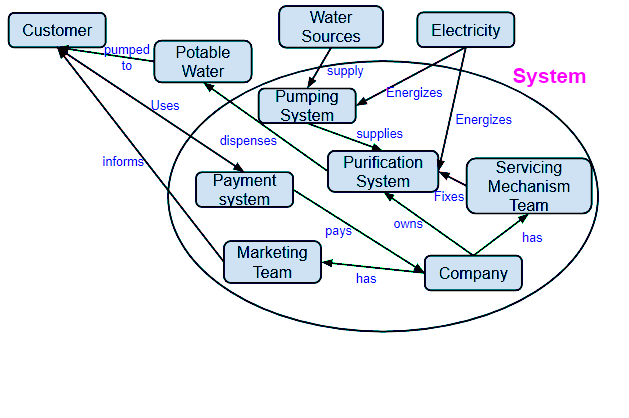
Step 4: Classify the relationships and add a legend
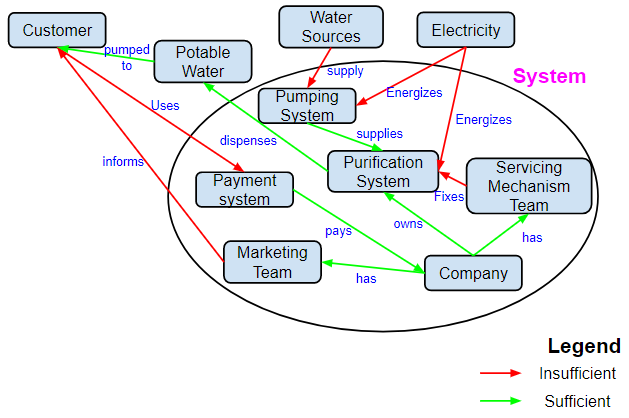
Step 5: Write the function
aka Job to be done
Step 6: Write down available objects
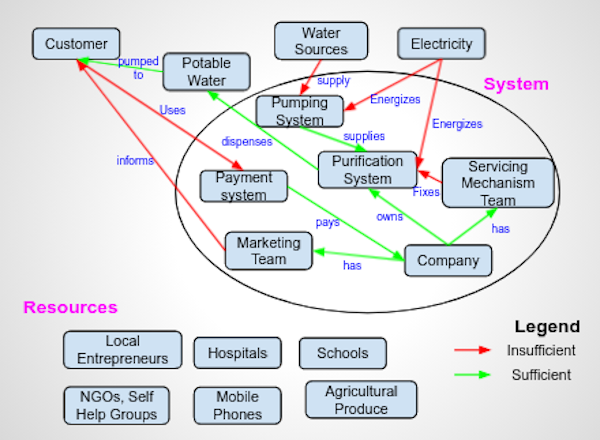
Hint - Available objects are objects in the environment not yet part of your system
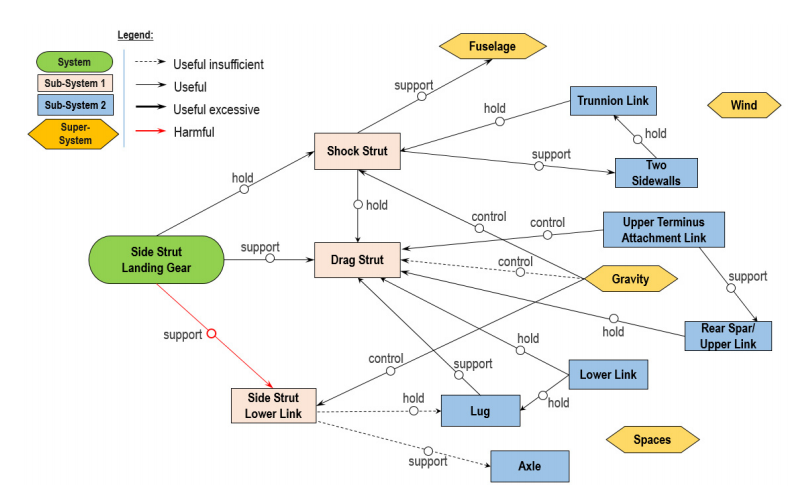
Source - Kamarudin et al, Procedia Engineering 131 ( 2015 ) 1064 – 1072
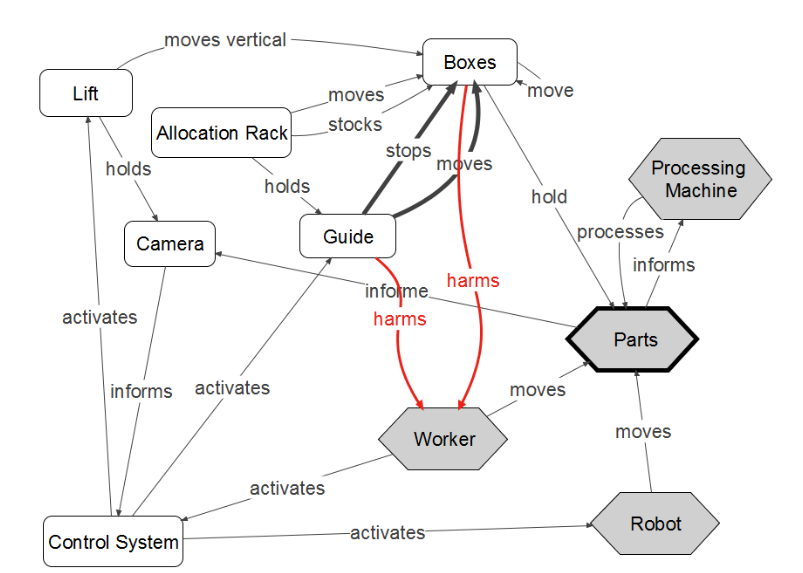
Source - https://triz-journal.com/case-study-with-triz-allocation-system-for-a-processing-machine/
Functional Analysis - The procedure
- List Objects of the System
- Connect the Objects
- Add verbs to the relationships
- Classify the relationships and add a legend
- Write the function
- Write down available objects
Task: TF - Problem - Function Map
- Continue in the same presentation as Task 1
- Start with your current system
- Perform functional analysis
- Highight your problems from your project on your function map
- How would you like to improve the system in the problem areas depicted?
Session 3: Tech Feasibility - Short Term
Problems Identification - Conflict or Contradiction
Take one item from your list of problems and ask yourself
What would you like to improve in the system?
What stops you from achieving this improvement?
What you just framed is a…
Conflict or Contradiction
What is a conflict or a contradiction?
Where can we learn how to define a conflict or a contradiction?
All that is fine, but where is conflict used on an almost daily basis?
Why so serious?

The Matrix
The conflicts
- If
- Morpheus reveals code,
- then
- agents hack into Zion's mainframe,
- but
- Zion is more important than Morpheus
- If
- tank pulls the plug,
- then
- Zion's codes will not be revealed,
- but
- Morpheus will die
- If
- Neo enters the military building,
- then
- he can attempt to save Morpheus,
- but
- there are three agents holding Morpheus
Bhool Bhulaiyya

The clip
The conflict
- If
- Manjulika (Avni) kills "Siddharth",
- then
- her revenge is complete (and Avni is cured of her illness),
- but
- Avni loses her husband
Source - https://trizindia.org/2009/09/triz-in-films-ideas-for-fooling-filmi-ghost/
Conflict or Contradiction Model
- If
- <Thing happens or Action taken>
- Then
- <Positive Consequence>
- But
- <Negative Consequence>
Conflict - Put on your movie critic's hat
- Think of a movie or novel that you really liked
- Pick a scene you liked
- Find out the conflict that the character faced
- Represent in the model that I described (If… Then… But…)
Time left for the exercise:
Formulation of a Conflict
The system
A luxury car's battery system
The Contradiction
- If
- a massive battery for long range driving is added
- then
- it provides long-distance luxury travel
- but
- the added weight increases braking distance
So, the problem now becomes - How might we reduce the braking distance?
Task: TF - Problem - Conflict
- Consider each item from the list "What would you like to improve in the system?"
- Ask "What stops you from achieving this improvement?"
- Frame each of these as a conflict in the contradiction model
- Rewrite the contradiction as a How-might-we question
じゃ、また
See you in 2 weeks
Session 4: Tech Feasibility - Short Term
Silent Brainstorming
- Write down all ideas for your desired results
- Keep track of the number of ideas
- Set a target number of ideas and beat the target
Time remaining:
Теория Решения Изобретательских Задач
Теория Решения Изобретательских Задач
TRIZ
TRIZ Nina Videos
TRIZ Philosophy
The system
A luxury car's battery system
The Contradiction
- If
- a massive battery for long range driving is added,
- then
- it provides long-distance luxury travel,
- but
- the added weight increases braking distance.
So, the problem now becomes - How might we reduce the braking distance?
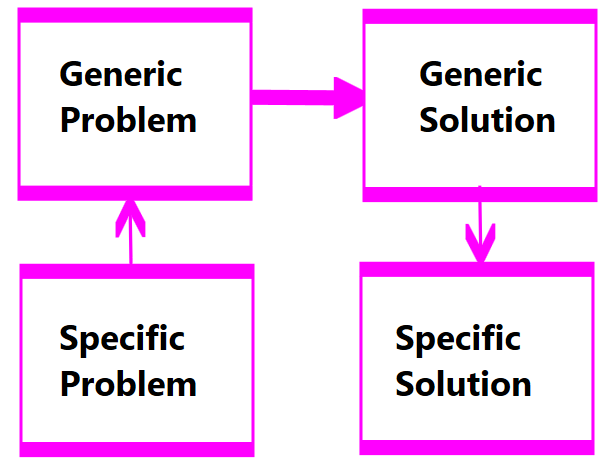
Step 1: Draft your conflict in specific terms

- Range vs.
- Braking distance
Step 2: Define the conflict in a generic manner
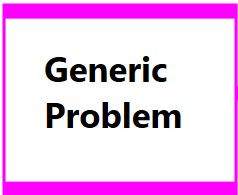
Tip - The mapping of the parameters needn't be exact
Step 3: Find the generic solution/principles from the Matrix

Step 4: Generate the specific solution for your problem

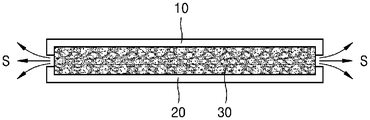
Pulsed Electromagnetic Braking (TRIZ 19: Periodic Action):
- Patent
- Electromagnetic pulse operated bi-stable brake
- Summary
- Describes an electromagnetic brake that uses DC pulses to latch and hold in either of two positions, eliminating the need for continuous current and reducing power loss.
Task: TF - Ideas
- Pick the How-Might-We question from the previous step
- Use the 4-stage TRIZ philosophy to generate ideas
- Use https://www.triz40.com/TRIZ_GB.php
- Combine/Merge all ideas from silent brainstorming and TRIZ into a concept
Task: TF - Ideas
- Pick the How-Might-We question from the previous step
- Use the 4-stage TRIZ philosophy to generate ideas
- Use https://www.triz40.com/TRIZ_GB.php
- Combine/Merge all ideas from silent brainstorming and TRIZ into a concept
Session 5: Tech Feasibility (TF) - Long term
Trends of Innovation
What was intended and what went wrong?
Voice of customer was clearly identified
but voice of the product blew him off-track
Ideally…
- We heard the voice of the customer
- We also hear the voice of the product
When voice of product meets voice of customer, we have innovation
- But, how do we know when voice of product will meet the voice of the customer?
- Voices of the products are the trends of innovation
can be applied to services as well
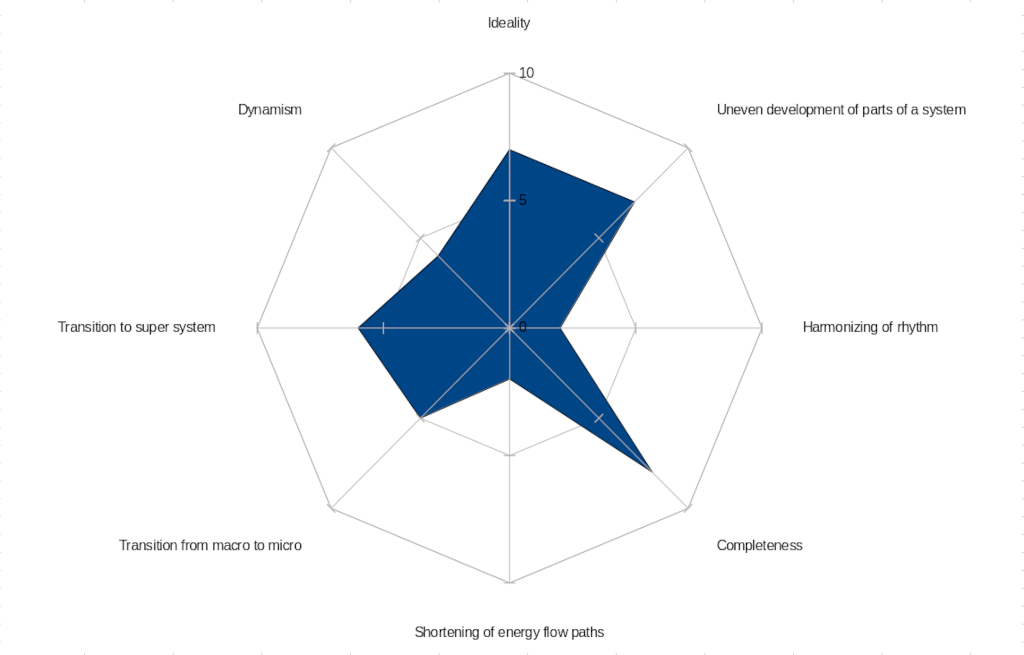
There are 8 trends of innovation
As observed by Genrich Altshuller, pioneer in the field of TRIZ, an invention methodology
- Law of increasing ideality
- Law of increasing dynamism
- Law of transition to super system
- Law of transition from macro to micro
- Law of shortening of energy flow paths
- Law of completeness
- Law of harmonizing of rhythm
- Law of uneven development of parts of a system
1
Law of increasing ideality
\[ IdealFinalResult = \frac{\Sigma Benefits\ or\ Features}{\Sigma TIMES} \]
TIMES stands for Time, Information, Material, Energy, Space




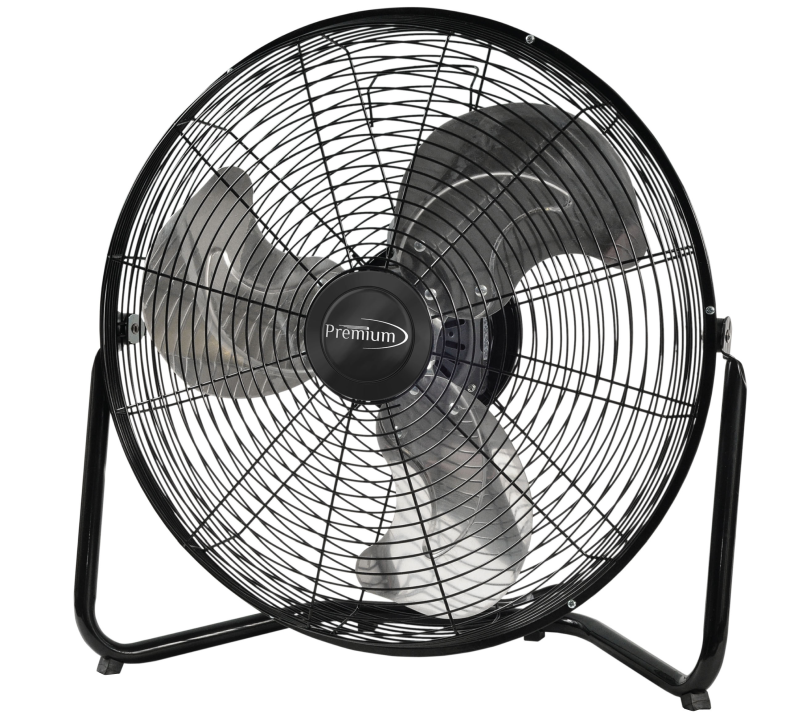
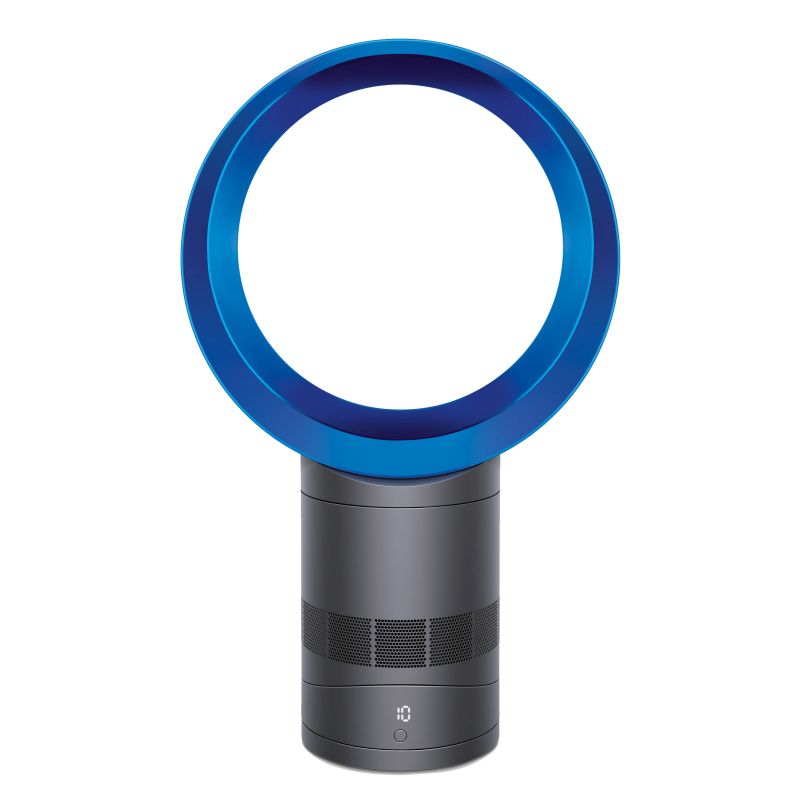
Think of other places
- Chat
- Shopping
Ideality - Your Turn
- Take any product or service that you really like
- Remove a component or part or a step
- Figure out a voice of customer (or a customer story) that matches your "new product"
Time remaining:
2
Law of increasing dynamism
Increase the number of hinges or moving parts in the system





Think of other places
- Chair
- Hospitals
Dynamism - Your Turn
- Take any product or service that you really like
- Increase the number of hinges in a flat or inflexible part of the product
- Figure out a voice of customer (or a customer story) that matches your "new product"
Time remaining:
3
Law of transition to supersystem
The function that the product carries out is absorbed into the "supersystem"
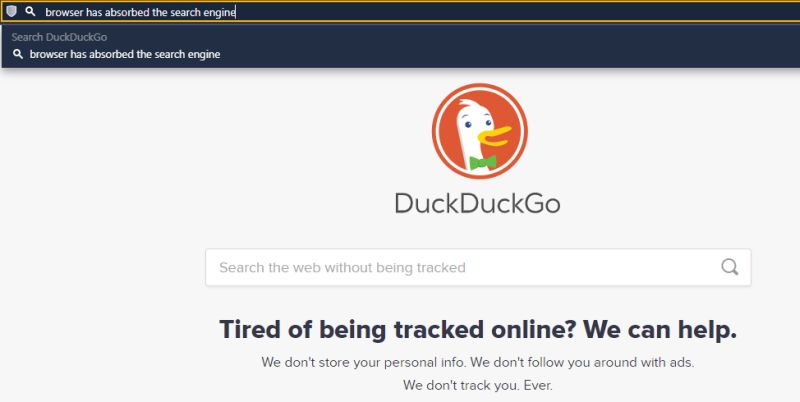
Think of other places
- Beds
- Fuel filling/recharging a vehicle
Supersystem - Your Turn
- Take any product or service that you really like
- Think about the "supersystem" that uses/houses the product
- Generate ideas on how the "supersystem" can absorb the product function
- Figure out a voice of customer (or a customer story) that matches your "new product"
Time remaining:
All Trends of Innovation
- Law of increasing ideality
- Law of increasing dynamism
- Law of transition to super system
- Law of transition from macro to micro
- Law of shortening of energy flow paths
- Law of completeness
- Law of harmonizing of rhythm
- Law of uneven development of parts of a system
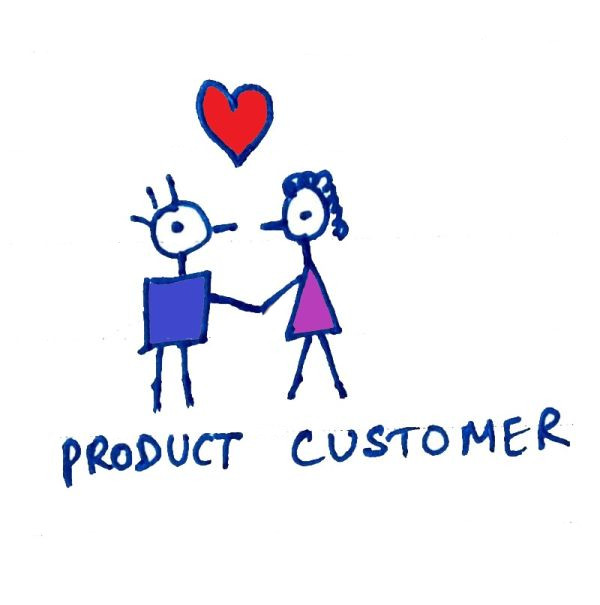
Age old story
Product meets Customer
Task: TF - Long term
- Take your product from the TF - short term stage
- Apply ideality
- Apply increasing dynamism
- Apply law of transition to supersystem
Conclusion
Now What?
①
- Apply the model in your area of work
- Teach this model to your neighbour/colleague who didn't attend this session
②
Learn even more by doing more projects using the learning from this course
Suggested References
- Karmic Design Thinking by Dr. Bala Ramadurai
- Design: Creation of Artifacts in Society by Prof. Karl Ulrich, U. Penn
- Change by Design by Tim Brown
- And Suddenly the Inventor Appeared, by G. Altshuller
- IDEO
- Stanford d.school
- Wikipedia.org - Four Noble Truths
③
Suggested Videos
Watch this - Empathize
Watch this - Analyze
Suggested Videos
Watch this - Solve
Watch this - Test
Acknowledgments
- Emacs - this old editor rocks! - https://www.gnu.org/software/emacs/
- Spacemacs - this new configuration is space age - https://spacemacs.org
- Org Mode - I run my life using this - https://orgmode.org
- Reveal.js - cool presentation script - https://revealjs.com/
- Org-reveal package - lets me live in org-mode - https://gitlab.com/oer/org-re-reveal
- Org-teaching - original codebase for this presentation - https://gitlab.com/olberger/org-teaching
- Plantuml - for all the cartoon work - https://plantuml.com/
- Hugo - for converting into static html - https://gohugo.io
- Gitlab - for hosting my website and the presentations - https://gitlab.com
Acknowledgments
- Conversations with
- Dr. Dmitry Kucharavy, Professor, France
- Dr. Murali Loganathan, Head, Research and Sales, Spirelia Innovation, India
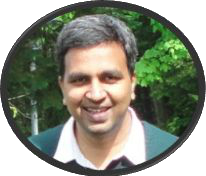
Meet Your Facilitator - Prof. Bala Ramadurai
Oh and one more thing
Selfie
2026-AU-GROW-Innovation